Google is scaling ads in AI Mode and adding ads to follow-up questions in the US. Here's why, what it means for organic visibility on commercial prompts, and a 90-day plan to protect it.
Google AI Mode is getting ads in follow-up answers
On October 28, Google said it's scaling ads in Google AI Mode to ten more markets, from Australia and Canada to India and Singapore, with Brazil, Mexico and the UK planned for the fourth quarter. For US marketers, the bigger line in the announcement is this one: Google is launching "multiturn ads" in the US, so ads can appear in follow-up questions inside an AI Mode conversation, as well as after the first query.
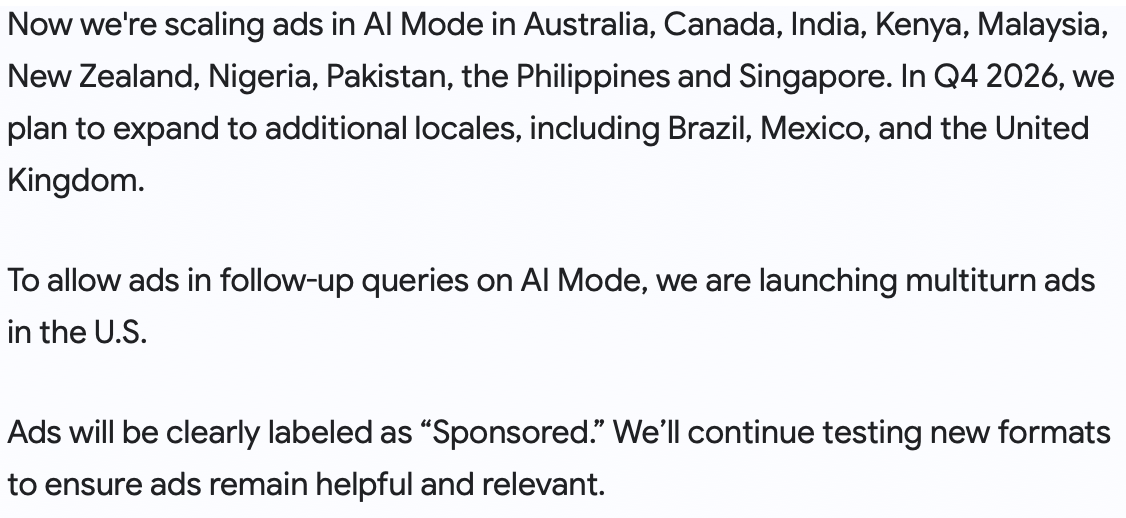
Google says the ads will be clearly labeled "Sponsored." That's the whole public spec so far. But the direction is clear: the conversational part of Google search, where a buyer narrows down options over several questions, is becoming paid inventory.
Why Google is moving fast
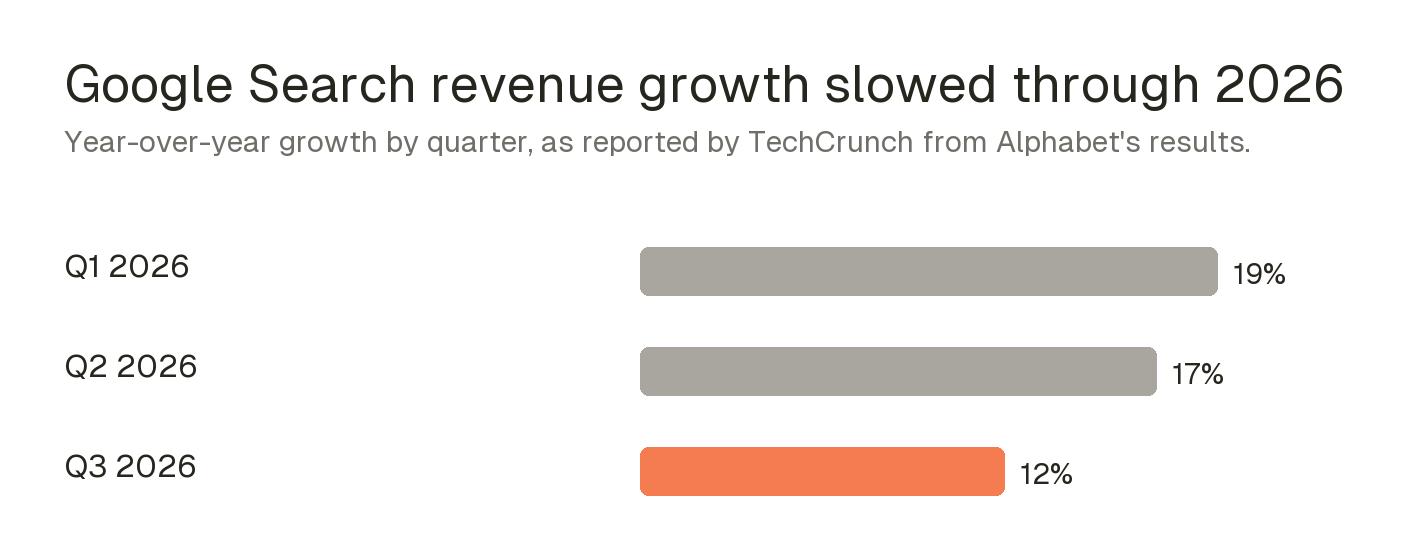
The timing isn't subtle. The same day, Alphabet reported third-quarter results in which Search revenue grew 12% year over year, down from 17% in the second quarter and 19% in the first, according to TechCrunch.
Google's case to advertisers rests on two claims. Its blog post says AI Mode queries are on average three times longer than traditional searches, which means more context about what a buyer wants. And it says click-through rates are already similar for sponsored and organic product listings within AI Mode. Google hasn't published the underlying numbers, so treat that as Google's claim rather than a benchmark.
Put those together and the commercial logic is plain. Longer, more specific conversations are exactly where a well-placed ad converts, and every follow-up question is a new chance to show one.
What changes for organic visibility in AI Mode
Paid placements don't remove organic results from AI Mode. The answer still cites sources and names brands. What changes is the competition for attention on commercial prompts, the "best," "compare" and "which should I buy" questions where an ad now sits next to the cited pages, and soon next to the follow-up answer too.
That splits visibility in Google AI Mode into four places, and only two of them are bought:
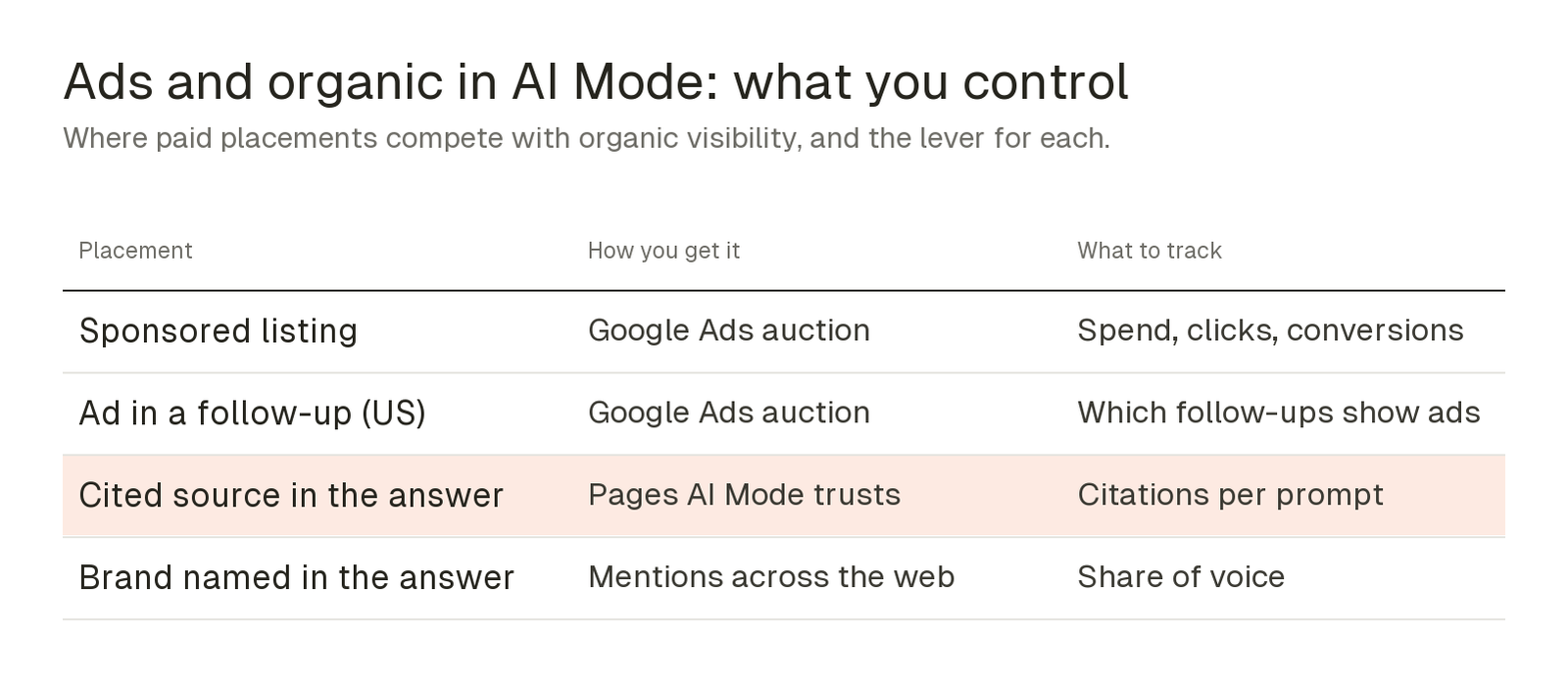
The organic levers are being cited as a source and being named in the answer. Both depend on pages AI systems can trust and on coverage elsewhere on the web, which is the same work our credibility audit guide walks through. The difference now is urgency: on commercial prompts, a brand that isn't cited or named is competing only with whatever its ad budget buys.
Picture a US buyer planning a team offsite. They ask AI Mode for the best project management tools for a 20-person agency. The answer cites three review pages and names five tools. Then they ask a follow-up: which of those integrates with Slack and costs under $15 a seat? Before multiturn ads, that second answer was organic only. Now it can carry a sponsored listing, and that follow-up is exactly where the buyer is closest to choosing. If your product was named in the first answer but drops out of the second, an advertiser can fill the gap.
Informational prompts are less exposed for now. Google's announcement focuses on commercial formats such as product listings, so the first place to check is the short list of prompts closest to a purchase.
Track your AI Mode prompts before ads crowd them
You can't protect what you don't measure, and Search Console doesn't break out AI Mode citations by prompt. Our earlier piece on measuring AI Mode traffic covers that gap. The practical fix is to track a fixed set of commercial prompts directly.
Prompt Tracking in Semrush's AI Visibility Toolkit checks your chosen prompts daily in ChatGPT, Google AI Mode and Gemini, and records your position, which brands appear and which pages are cited. Its Sources view shows which domains AI answers lean on for your prompts, which tells you where to earn coverage if your own pages aren't cited.
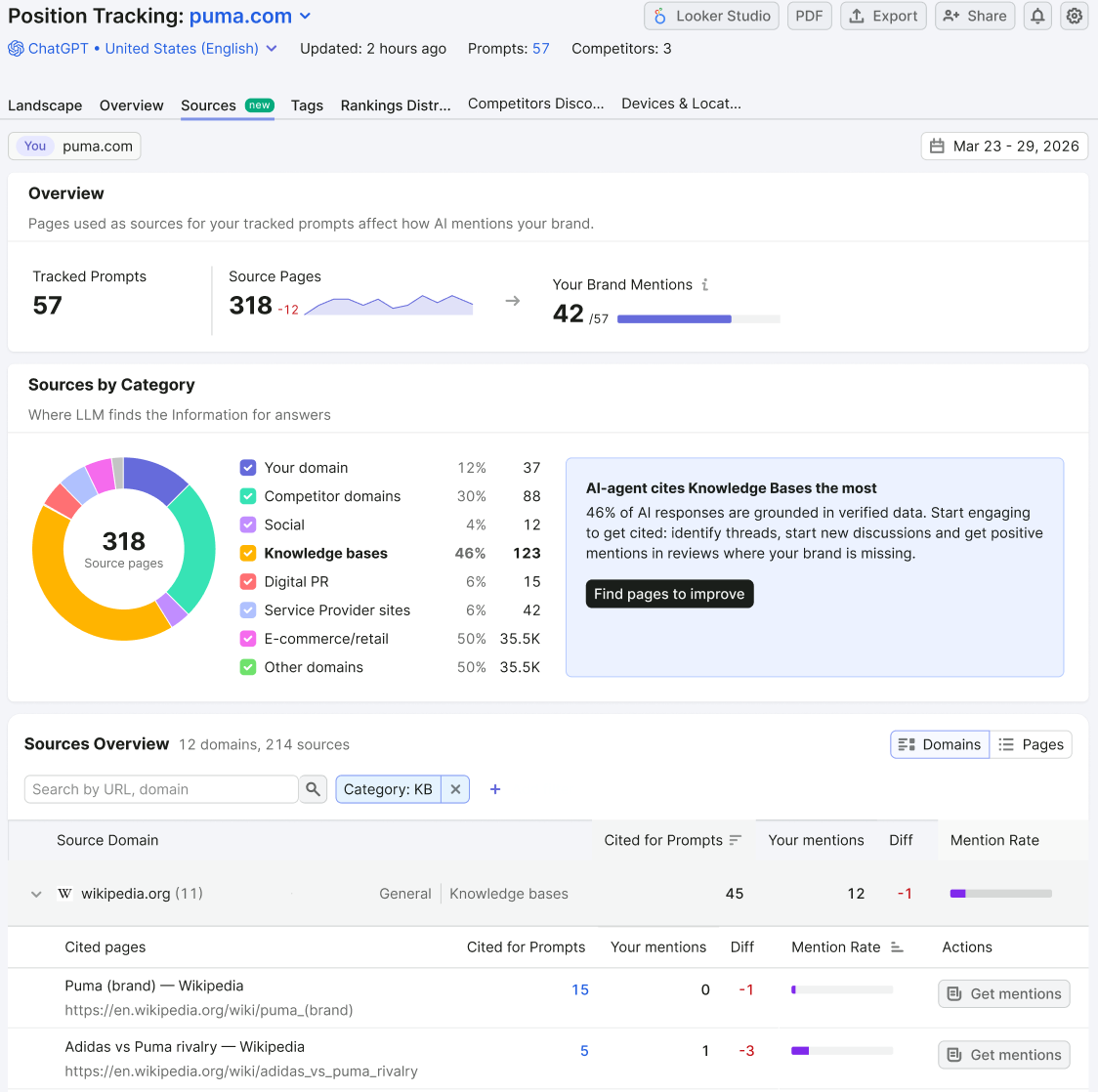
Read the results by prompt, not by average. A brand can hold a strong overall AI visibility score while missing from the three prompts that matter most for revenue. Sort your tracked prompts by how close they are to a purchase, then check two things for each: are you cited, and are you named? A prompt where you're named but not cited means AI Mode knows your brand but trusts someone else's page to describe it. A prompt where you're neither is where ads will hurt most.
Start with 20 to 30 prompts a buyer asks right before choosing, then add the follow-ups they're likely to ask next, since those are now the prompts Google can monetize.
A plan for the next 90 days
Month one is the baseline. Record, for each tracked prompt, whether you're cited, whether you're named, and who is. Note which prompts already show sponsored listings when you check them by hand.
Month two is the gap work. For prompts where competitors are cited and you aren't, compare the cited pages with yours. Usually the winners answer the exact question on one page, show specific proof, and have independent coverage. Fix the pages you own first, then pursue the third-party sources AI Mode keeps citing.
Month three is the paid decision. If a high-value prompt stays out of reach organically, that's the one case where an AI Mode ad earns its spend. Track it alongside the organic numbers, so you can see whether paid is filling a gap or just buying clicks you'd have earned anyway.
Semrush One includes the AI Visibility Toolkit and the SEO Toolkit, so prompt tracking and classic rankings live in one place. It has a 7-day free trial, enough to set up your prompt list and capture a first baseline.
Key takeaways
- Google is scaling ads in AI Mode to 10 more markets and launching ads in follow-up questions in the US.
- Google says sponsored and organic product listings already get similar click-through rates in AI Mode.
- Organic visibility in AI Mode now means being cited or named on commercial prompts, next to ads.
- Track a fixed set of buying prompts and their follow-ups, and record who is cited and named.
- Fix your own pages first, earn third-party coverage second, and buy ads only where organic can't reach.