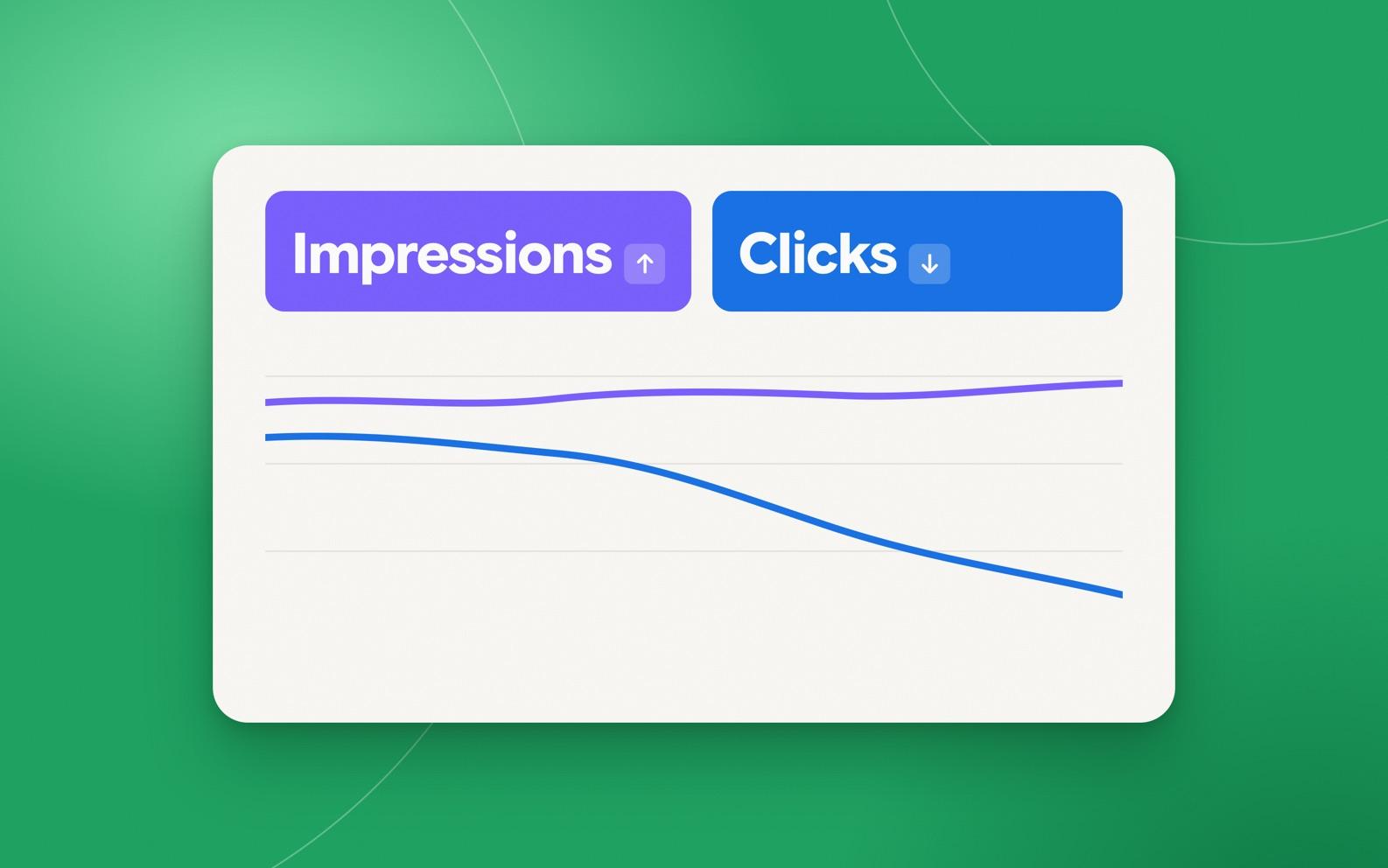
Scaled AI content is losing ground and Google now expects manual review of AI pages and metadata. Here's how to find decaying sections, sort pages into keep, update, merge or remove, and gate new content.
AI content SEO hit the review wall
Two years ago the pitch for AI content SEO was simple: publish more pages, faster, for less. A lot of teams did exactly that, and many are now looking at whole sections that have stopped growing, or stopped being indexed, with no clear message from Google about why.
Google moved the goalposts in writing on October 1. Its guidance on generative AI content now says it is critical to manually fact-check and review all AI-generated content for accuracy before publishing, and that the review also applies to metadata: title elements, meta descriptions, structured data and image alt text. The same page warns that generating many pages without adding value for users may violate the scaled content abuse policy.
Read those two lines together and the bottleneck flips. Producing a page is nearly free now. Reviewing it properly is not, and Google has made that review part of the standard. The teams that come through this well will be the ones that publish fewer pages and check every one.
More output hasn't meant better results
The survey data points the same way. Orbit Media's 2026 blogging survey of 1,042 content marketers found that only 13.9% say their blog delivers strong results, the lowest figure in the survey's history. Meanwhile 92.4% now use AI for blogging, and Orbit found that this use doesn't correlate with better results.
What did correlate is telling. The practices linked to strong performance, including original research, keyword research, a formal editing process and regular use of analytics, are all becoming less common. Marketers who use six or more of the strong-performance practices are nearly three times as likely to report strong results. None of the 1,042 respondents used all eight.
In other words, AI didn't break content marketing. Skipping the slow parts did. The fix is to put the slow parts back, starting with an honest look at what you've already published.
Find the decay before Google tells you
Google won't send a note saying it stopped indexing a section. You notice weeks later, when traffic is already gone. Start the audit with a crawl. Semrush's Site Audit crawls the site and scores its health, lists errors and warnings, and flags issues such as duplicate content, missing or duplicate title tags and low text-to-HTML ratio. Those last three are the fingerprints of templated, scaled pages.
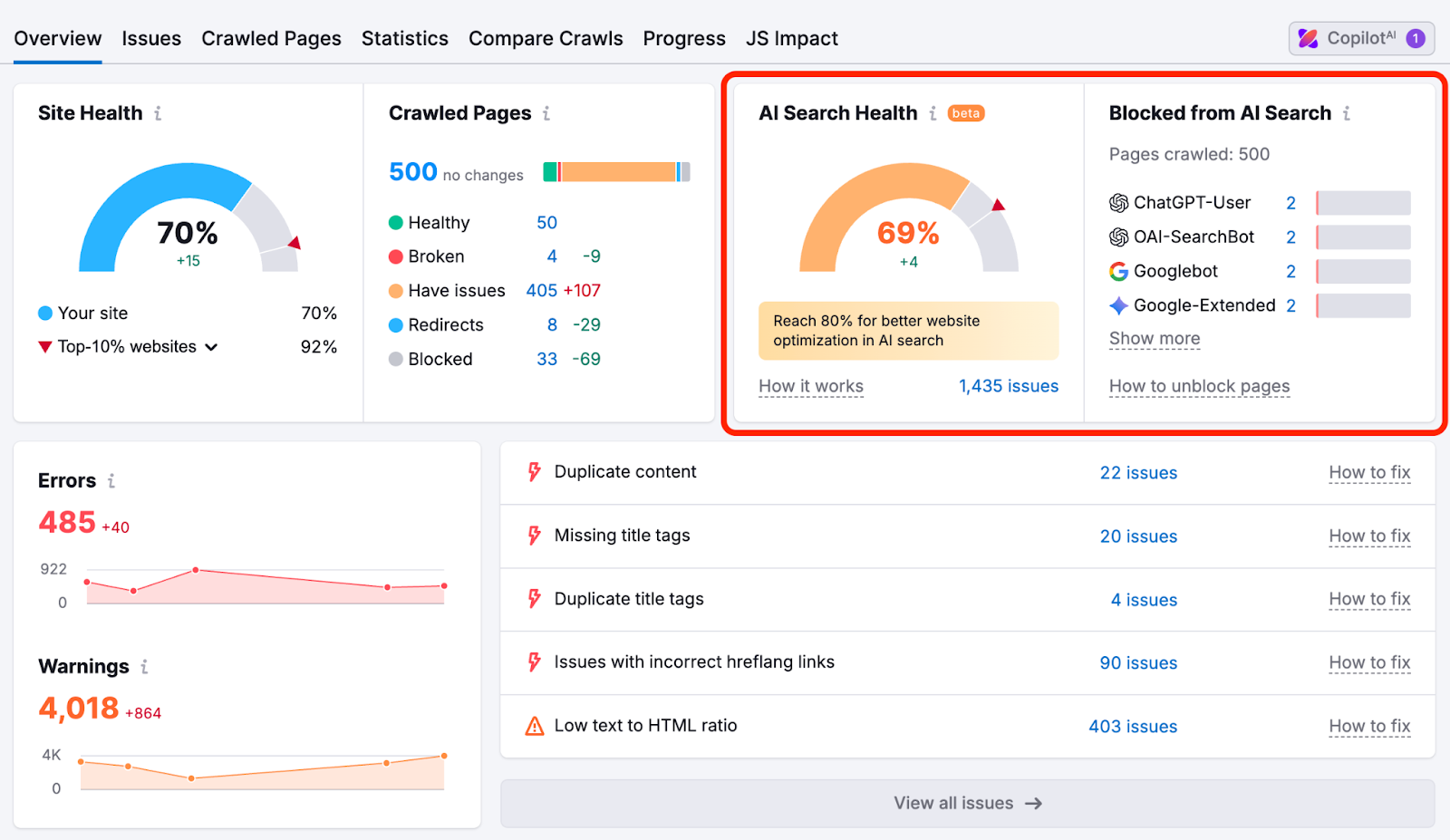
Group the issues by folder or template rather than reading them one URL at a time. If one template accounts for most of the duplicate content and thin pages, that's the section Google is most likely to have stopped trusting, and it's where the pruning starts.
Site Audit is in Semrush's SEO Toolkit, and Semrush One includes it with a 7-day free trial. A week is enough to crawl the site, pull the ranking history and make a first pass at the pruning list below.
Decide page by page: keep, update, merge or remove
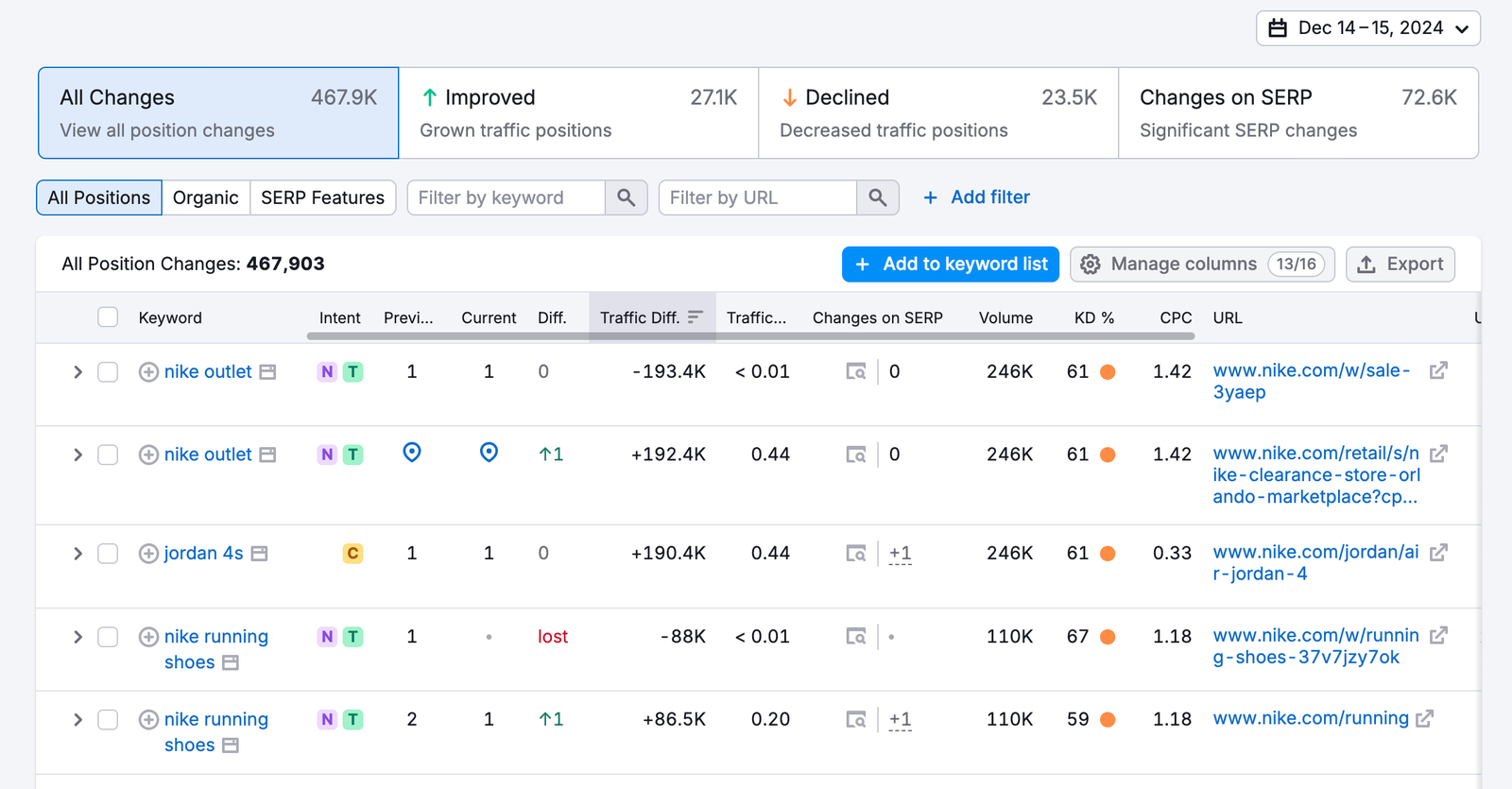
A crawl tells you which pages are weak technically. Rankings tell you which ones still earn their place. The Organic Research Position Changes report lists every keyword that moved, with the URL, previous and current position, and the traffic difference, including keywords a page lost entirely. Filter it by the folders your crawl flagged.
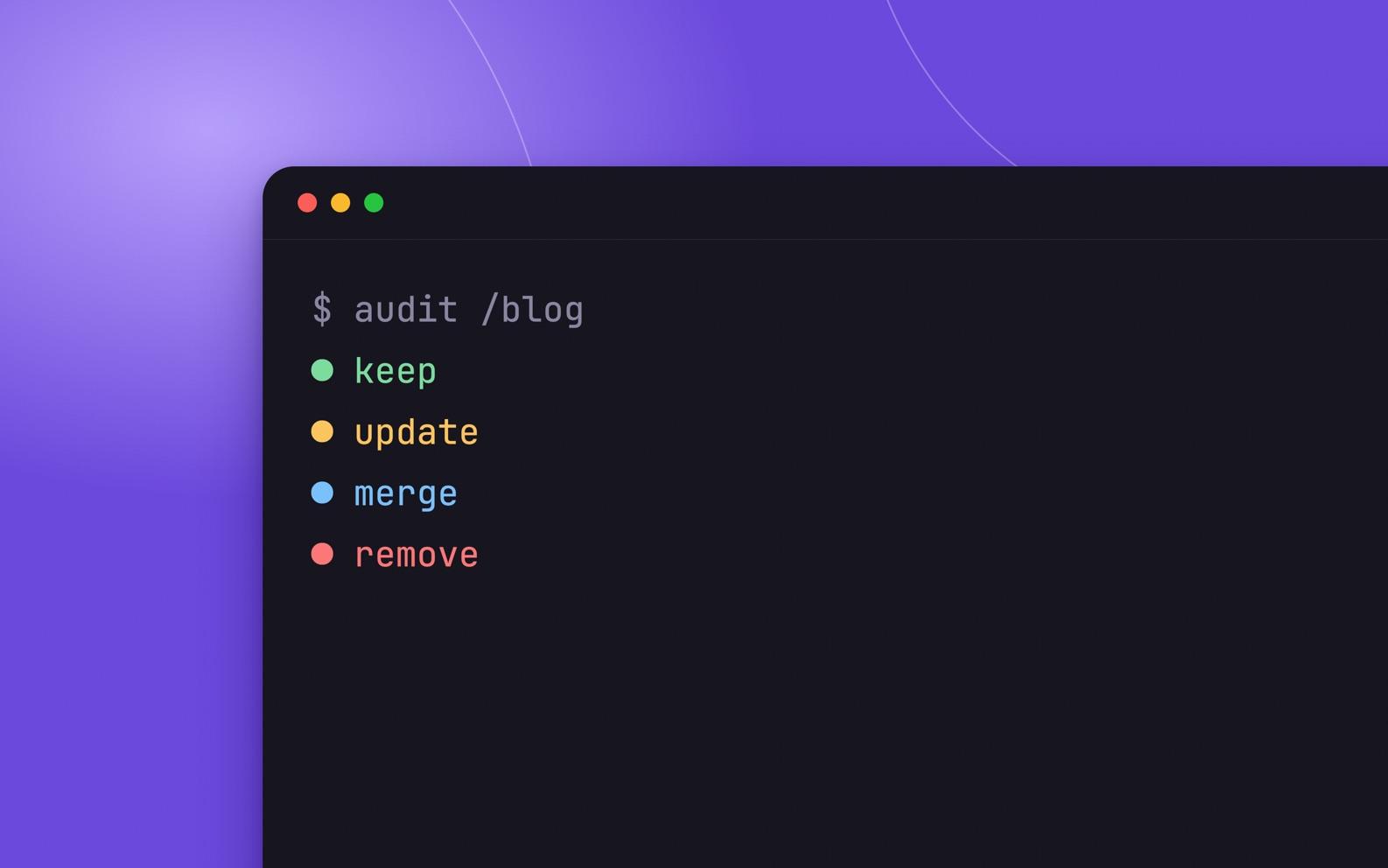
Content pruning has a bad reputation because it sounds like admitting failure. It isn't. A smaller site where every page earns visits, links or leads sends a clearer quality signal than a large one where half the pages are padding. Put the crawl and the ranking data together and every page lands in one of four buckets. This is the rule set we use for a first pass:
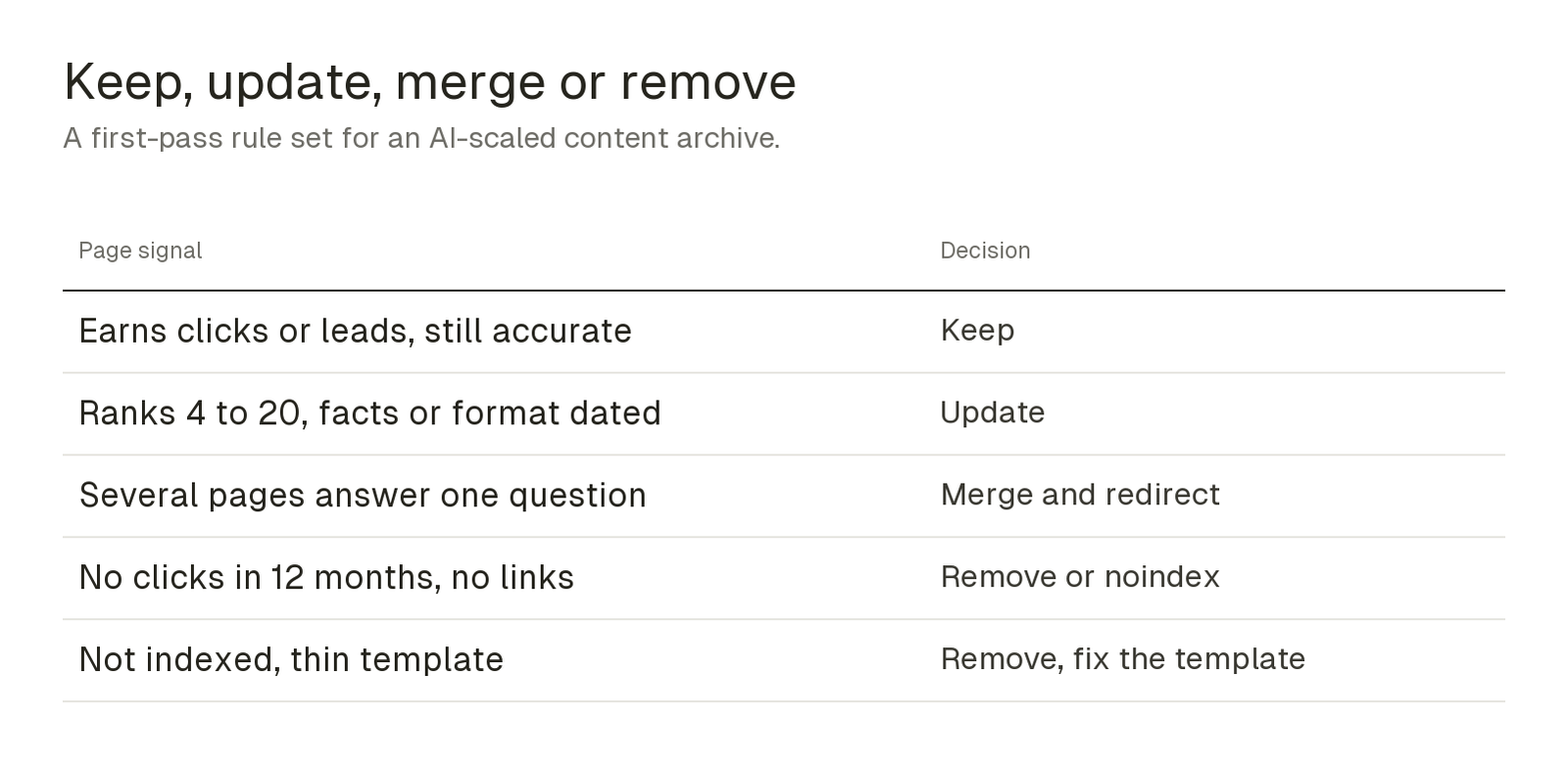
Two cautions. Don't delete a page that has backlinks without redirecting it to the closest match, or you throw the links away. And treat "not indexed" seriously: in Google's own timing ranges, as recapped by Search Engine Journal, pages judged low quality can take months to index or never get indexed at all. Waiting won't change that. Fixing or removing the template will.
Merging deserves the most attention, because scaled AI content creates so much overlap. A typical case is a programmatic set of pages like "best CRM for dentists", "best CRM for chiropractors" and twenty more, each with the same body and a swapped noun. Pick the strongest page, fold in anything the others say that's specific and true, add a comparison table or real examples, and redirect the rest to it. One page with substance usually ranks better than twenty thin ones competing with each other.
Put a review gate in front of everything new
Pruning fixes the archive. A review gate keeps it from filling up again. Google's guidance makes manual review the expectation, and the practical question for a small team is how to make that review fast enough to actually happen.
Semrush's SEO Writing Assistant helps here. It checks a draft for readability, SEO, tone of voice and originality inside Google Docs, WordPress or Semrush, and highlights the sentences behind each issue. Its originality check flags passages that match text already on the web, which is exactly the kind of commodity copy a scaled AI draft tends to produce.
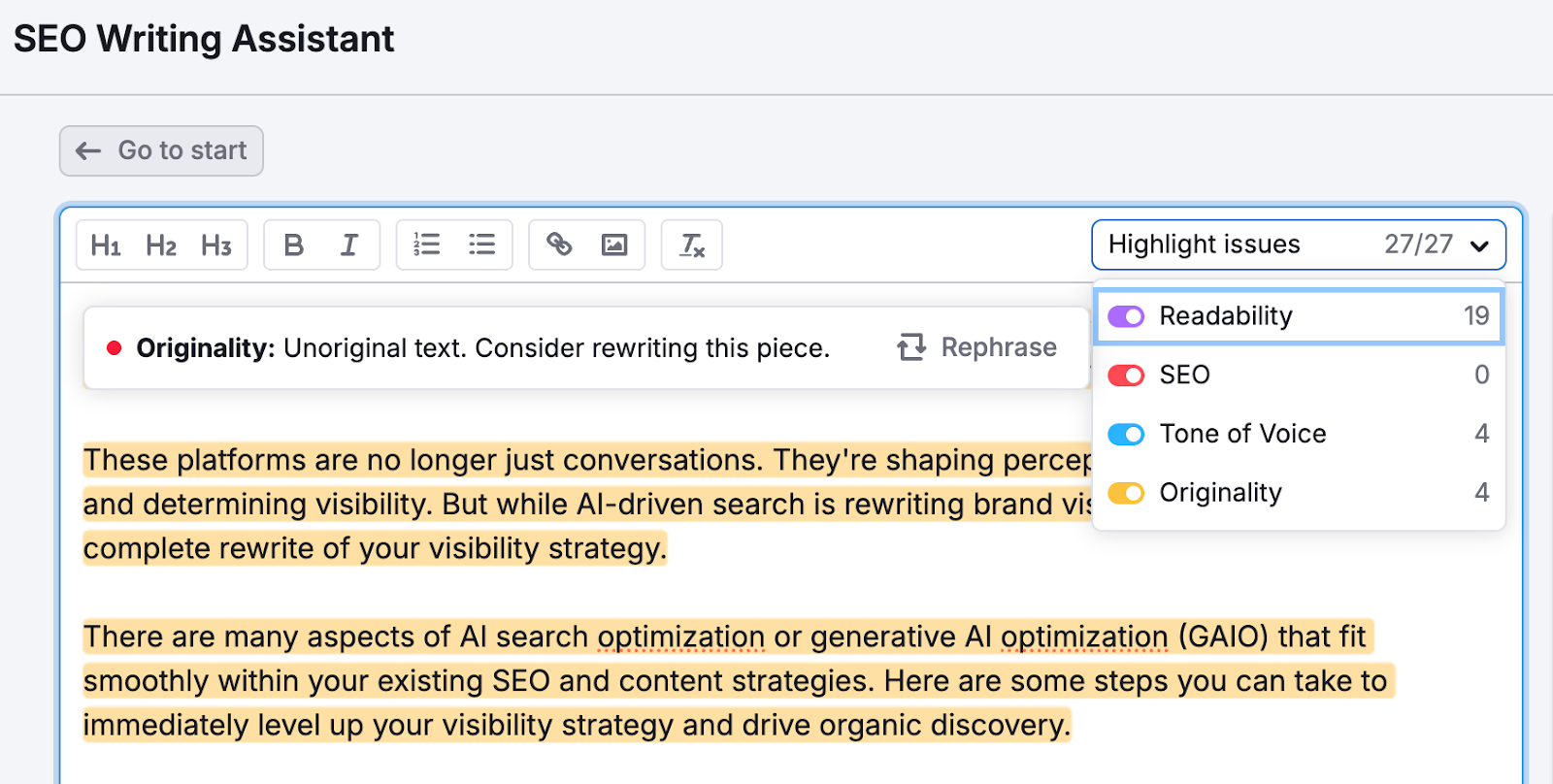
A tool doesn't replace the human check Google asks for, so build both into the workflow. Before anything publishes, a person confirms every number against its source, rewrites the title and meta description by hand, checks the structured data and writes real alt text. Then the draft goes through the writing assistant for originality and readability. It adds maybe twenty minutes a page, which is the point: you'll publish fewer pages, and each one will carry its weight.
Where to spend the time you save
Publishing less frees up hours, and the Orbit data is clear about where they should go: original research, real editing and the analytics work most teams dropped. A single survey, a dataset only you have or a firsthand test will do more for a domain than another fifty pages that restate what is already ranking.
If your site went through any of this year's spam updates, start the audit now rather than after the next one. Scaled pages that add nothing are what those updates are built to find.
- Crawl the site and group issues by template or folder.
- Pull position changes and lost keywords for the flagged folders.
- Sort every page into keep, update, merge or remove, and redirect anything with links.
- Add a human review step for facts and metadata, then an originality check, before each page publishes.
- Move the saved hours into one piece of original research per quarter.
Sources
- Google Search Central: Google Search's guidance on using generative AI content on your website
- Orbit Media: Blogging statistics 2026, what 1,042 content marketers told us
- Search Engine Journal: Google shows how long crawling, indexing and recovery can take
- Google Search Status Dashboard: Ranking incident history
- Semrush KB: Site Audit overview report
- Semrush KB: Position Changes report
- Semrush KB: SEO Writing Assistant
- Semrush KB: Semrush One