Image: Flickr / Wikimedia Commons / Unsplash
Google AI Mode Is Taking Informational Searches. Your Analytics Can't Say How Many.
Google keeps pulling AI answers deeper into the results page, and its own reports stop at impressions. Here is how to triage your content and measure AI visibility anyway.
This article contains an affiliate link. AI Eating The World may earn a commission on qualifying purchases, at no extra cost to you.
Google AI Mode and expanded AI Overviews are absorbing informational queries, while Search Console reports AI impressions but no clicks or queries. A look at the data, the measurement gap, and a practical triage plan.
Google AI Mode keeps creeping into the results page
Google hasn't said that Google AI Mode is now the default for everyone. It has just kept moving the furniture. On August 28, 2026, Search Engine Roundtable reported that some AI Overviews now load the full answer with the follow-up box already open, no Show more click needed. A Google spokesperson said Overviews can expand on their own for topics where its systems decide that is most useful. Google was also spotted testing a Loading label in place of the Show more button.
The bigger changes landed at I/O on May 19, 2026. Google made Gemini 3.5 Flash the default model in AI Mode, rebuilt the search box for the first time in more than 25 years, and said AI Mode has passed one billion monthly users. It also promised generative UI for everyone in Search this summer: custom visualizations, simulations and small interactive tools built on the spot for a given question.
If part of your traffic comes from free calculators, explainers or quiz widgets, that last bit deserves a second read. The results page can now improvise a rough version of your tool. I think that, more than any single click-through statistic, is the real threat to informational content.
The click data is ugly, but it isn't uniform

Pew Research followed the browsing of 900 US adults in March 2025. On results pages with an AI summary, people clicked a traditional result link in 8% of visits. Without one, the figure was 15%. Just 1% of visits with a summary included a click on a link inside the summary, and 26% of those visits ended the browsing session, compared with 16% on pages without one.
Seer Interactive's numbers point the same way. Across 3,119 informational queries at 42 organizations, organic click-through fell 61% between mid-2024 and September 2025 on queries that triggered Google AI Overviews. HubSpot's chief marketing officer told Engineers Journal that click-through on searches with AI Overviews runs 60% to 70% lower, and the publication reported that the company lost about 140 million visits in a single year.
It isn't a straight line down, though. Seer's follow-up covered 53 brands, 5.47 million queries and 2.43 billion impressions from January 2025 through February 2026, and found the steep 2025 slide did not carry into early 2026. Click-through on informational queries without an AI Overview even climbed from 2.9% to 4% by the end of 2025. Being cited also paid off: Seer found brands cited in AI Overviews got organic click-through 35% higher than brands that weren't.
The exposure is also specific. In Pew's data, only 8% of one- or two-word searches produced an AI summary, versus 53% of searches with ten or more words and 60% of searches that start with who, what, when or why. Long, question-shaped queries are the ones that lose clicks first.
What Search Console will and won't tell you
The measurement side is almost as frustrating as the traffic side. Since June 17, 2025, Google has folded AI Mode clicks, impressions and position into the standard Web totals in Search Console, with no way to filter them out.
On June 3, 2026, it added dedicated Search Generative AI performance reports covering AI Overviews, AI Mode and Discover. They report impressions, pages and dates. They don't report clicks, and they don't show the queries behind the impressions. Google is also rolling them out in stages, so some accounts don't have the report yet.
That's real progress. Google had indicated less than two years ago that it didn't plan AI Overview-specific reporting. But you can now learn that a page showed up in an AI answer without learning what that appearance was worth. Whether Google ever adds click data is the thing to watch.
How I'd triage informational pages right now

Start by sorting instead of rewriting. Pull your informational pages and split them by the kind of query they serve: long, question-style searches, which Pew found trigger AI summaries most often, versus short head terms that rarely do. Expect lower click-through on the first group no matter where you rank.
Next, open the generative AI report and compare each page's AI impressions with its Web clicks. A page with rising AI impressions and flat or falling clicks is being used as a source but not visited. That isn't automatically a loss, since Seer's cited-brand data suggests being the source carries some value. It does change what you should measure.
For pages worth defending, the work looks like what HubSpot calls answer engine optimization: lead with a direct answer and structure the content so AI tools can lift it cleanly. HubSpot says AI now sends 7% to 12% of its website visitors in most months. Google's own documentation says standard SEO best practices still apply to its AI features, so this is mostly ordinary AI search optimization done carefully, not a separate discipline.
Put new budget where AI answers fall short: comparisons, pricing breakdowns, original data and anything a reader has to evaluate before buying. Those are my picks, not findings from the studies above, but they follow from where the click losses cluster.
Tracking AI visibility outside Google's reports

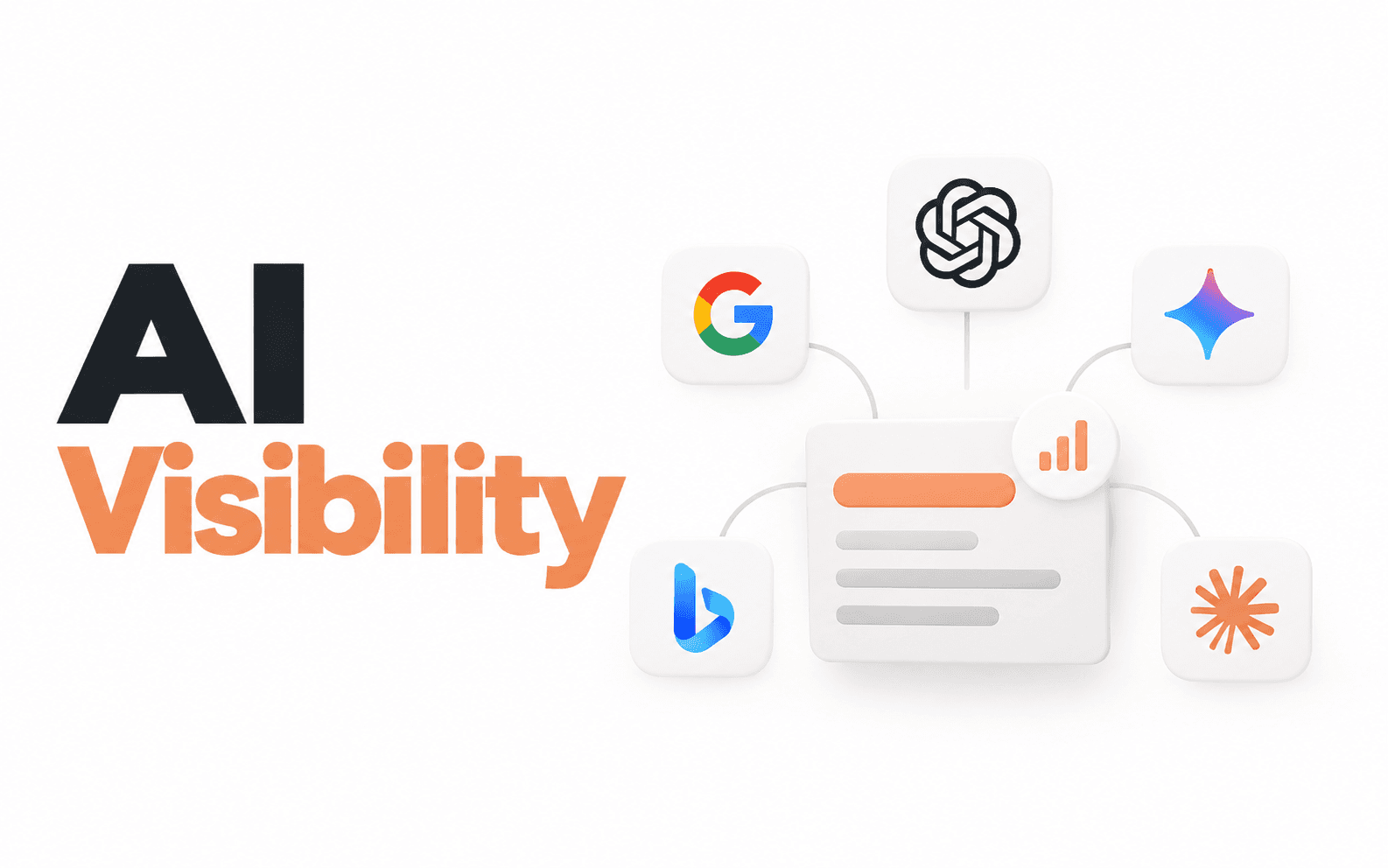
Search Console only covers Google's own surfaces, and only as impressions. The rest of the AI search visibility picture sits in ChatGPT, Perplexity, Gemini and the prompts that trigger Google's answers. That gap is what Semrush's AI Visibility Toolkit is built to fill. It tracks brand mentions, citations, sentiment and share of voice across ChatGPT, Perplexity, Gemini, Google AI Overviews and AI Mode, drawing on a prompt database of well over 150 million prompts.
The workflow is simple. Take the 25 prompts closest to your most exposed informational pages (25 is the default tracking allowance, and more can be added), then watch whether your brand gets mentioned or cited, who appears instead, and how the answer describes you. Judge it on weekly trends, not single answers, because AI responses shift from run to run. That is how AI visibility tracking turns from anecdote into something you can report on.
Recent reviews put the toolkit at about $99 a month per domain, so confirm the current number on Semrush's site. The 7-day free trial is long enough to load your prompts, get a first read on where you stand, and decide whether weekly tracking belongs in your reporting. If you also want keyword research in the same workflow, our guide to Semrush MCP in Claude covers that setup.
Sources for this section
What to take from all this
- Expect long, question-style informational queries to lose clicks first, and adjust traffic forecasts for those pages.
- Compare Search Console's generative AI report against Web clicks page by page to find content that gets cited but not visited.
- Aim new content investment at comparisons, pricing and original data that an AI summary can't fully replace.
- Track AI visibility across ChatGPT, Perplexity, Gemini and Google every week. The 7-day free trial of Semrush's AI Visibility Toolkit is a low-effort way to get a baseline.
Sources
Brian Weerasinghe is the founder and editor of AI Eating The World, where he covers artificial intelligence, tech companies, layoffs, startups, and the future of work. His reporting focuses on how AI is transforming businesses, products, and the global workforce. He writes about major developments across the AI industry, from enterprise adoption and funding trends to the real-world impact of automation and emerging technologies.