Image: Flickr / Wikimedia Commons / Unsplash
Google AI Overviews Now Appear on Most Branded Searches
Branded queries were the one corner of search most teams didn't worry about. September's tracking data suggests that corner is gone, and the click-through baselines built on it need to be redone.
This article contains an affiliate link. AI Eating The World may earn a commission on qualifying purchases, at no extra cost to you.
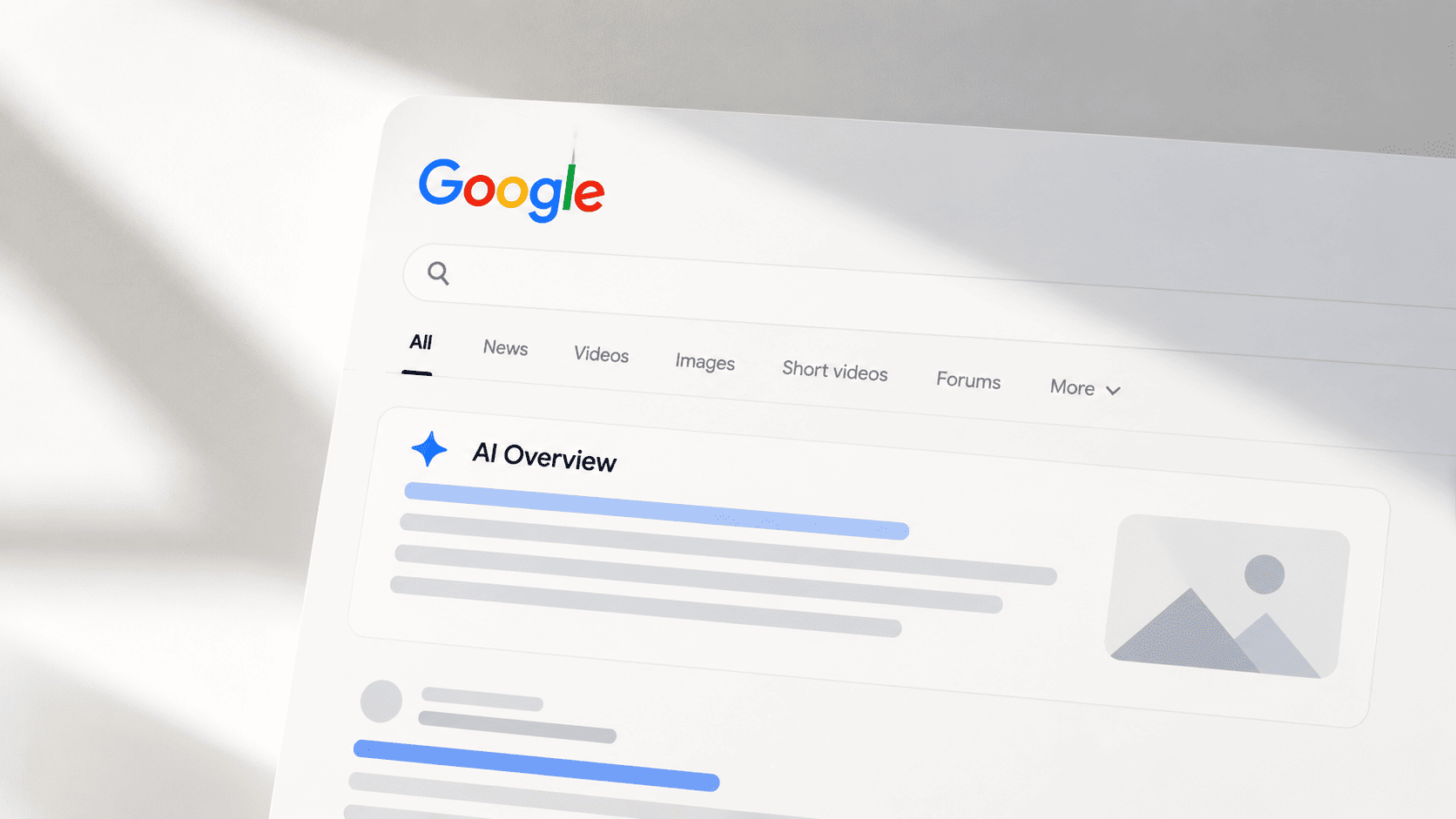
DemandSphere tracked Google AI Overviews on branded queries rising from 26% to 90% during September 2026. Here is what that means for US marketers and how to measure the damage.
From 26% to 90% in four weeks

Google AI Overviews now show up on most branded searches, at least in the keyword set DemandSphere tracks. Its daily readings put the share of branded queries with an Overview at 26.12% on September 1, 2026, and at 90.48% on September 27. That is about a 3.5x jump in under a month, on queries where a company's own site used to own the page.
The line wasn't clean. It dipped to 80.23% on September 28 and recovered to 82.06% the next day, so the honest summary for late September is somewhere between 80% and 90%. Chris Long, a co-founder of Nectiv, separately posted a reading of 93% for enterprise brand queries around the same time. Google hasn't announced anything, which leaves three possibilities: a rollout, a test, or a measurement quirk. Nobody outside Google can say which.
Two caveats before anyone quotes these numbers in a deck. Both come from tracked keyword sets, not from all of Google, and brand mix, device, and location all move the result. Check your own branded keywords before you borrow someone else's percentage.
Sources for this section
What a click is worth when the answer sits above your homepage

Pew Research Center's browsing study of 900 U.S. adults found people clicked a regular search result in 8% of visits that showed an AI summary, versus 15% when there was none. Clicks on a link inside the summary came in at 1%. That data is from March 2025 and covers all queries, not branded ones, so I wouldn't paste it onto your own numbers.
Branded searches have always been the exception. Someone typing your company name already wants you. One 2026 analysis of 21.7 million Search Console impressions found navigational queries lost 8% to 13% of their clicks when an Overview appeared, against 55% to 61% for informational ones. If that holds, branded traffic erodes more slowly than everything else.
I don't think the real risk is the lost click, though. It's the summary itself. An Overview on your brand query can pull from review sites, forum threads, or a competitor's comparison page, and it lands above your homepage. You can rank first and still lose the framing.
AI search visibility is a reporting problem first

Most branded-search dashboards lean on impressions, average position, and click-through rate. All of them can look healthy while the page underneath changes. Impressions hold, rank holds, CTR slides, and the report reads like a mystery.
What's missing is a column for whether an Overview appeared, whether your brand was named in it, and which domains it cited. That last one matters. Seer Interactive's 2026 data, as reported by TechWyse, found brands cited in an AI Overview earned a 15.74% paid click-through rate on the same queries, compared with 11.19% when they weren't.
Reporting needs the same split. Transactional and bottom-of-funnel queries still send clicks, so a dip in branded CTR shouldn't get presented as a sitewide traffic loss. Tell stakeholders which bucket moved. And because third parties can shape what the Overview says about you, the work spills past the SEO team into PR, review management, and social. I'd rather walk a CEO through a re-baselined chart with a clear note than explain a surprise drop in a quarterly review.
Sources for this section
Checking your brand queries in Semrush One

I was using Semrush well before any partnership existed, and this is the kind of problem it's built for. Semrush One, which launched in October 2025, puts the SEO Toolkit and the AI Visibility Toolkit under one login, so rankings and AI answers sit in the same project instead of two tabs and two exports.
Here is the routine I'd run for a brand with real branded traffic. Start with Position Tracking: load your brand terms and your highest-value commercial terms, track them daily, and line the results up against Search Console clicks. Queries where position is steady but clicks fall are your candidates for Overview interception. Then open the AI Visibility Toolkit's reports to see how often your brand is mentioned or cited across Google AI Overviews, ChatGPT, Perplexity, and Gemini, and how that compares with competitors. This is where AI visibility tracking earns its keep.
Keyword Gap shows where competitors still pick up organic clicks you don't, which tells you where to spend effort while branded CTR settles. Site Audit is the unglamorous last step: if crawlers can't parse your pages, you won't get cited, whatever else you do.
The 7-day free trial is the practical way to test all of this. A week is enough to create a project, load your brand terms and a competitor set, and read a first round of AI visibility data next to your own Search Console numbers. Put the end date in your calendar so you decide on purpose. Small sites with very little branded traffic can reasonably start with Search Console alone.
Sources for this section
AI search optimization starts with a new baseline
The fix is mostly measurement, and it fits in a week.
- Search your brand name in a logged-out window and note whether an AI Overview appears, whether you're named, and which sites it cites.
- Export 90 days of branded queries from Search Console and mark where impressions held while CTR dropped.
- Report branded queries with an Overview separately from those without, and set a fresh CTR baseline for each.
- Share the cited sources with PR, social, and support, since they influence what the Overview says.
- Check again in 30 days. The late-September numbers moved around, and Google hasn't said whether this is permanent.
Sources
Brian Weerasinghe is the founder and editor of AI Eating The World, where he covers artificial intelligence, tech companies, layoffs, startups, and the future of work. His reporting focuses on how AI is transforming businesses, products, and the global workforce. He writes about major developments across the AI industry, from enterprise adoption and funding trends to the real-world impact of automation and emerging technologies.