Image: Flickr / Wikimedia Commons / Unsplash
Google Spam Update September 2026: How to Tell If It Hit Your Site
Google's fourth spam update of the year took nearly two weeks to roll out and came with no explanation. Here's how to separate its effects from the rest of a noisy September.
Image: Flickr / Wikimedia Commons / Unsplash
This article contains affiliate links to Semrush. AI Eating The World may earn a commission on qualifying purchases, at no extra cost to you.
Google's September 2026 spam update ran from September 24 to October 8, far longer than earlier 2026 spam updates. Here's how to check whether it hit your site and what recovery takes.
What Google released, and what it didn't explain
Google started rolling out the Google spam update September 2026 on September 24 at 9:15 a.m. Pacific, and its Search Status Dashboard marked it complete on October 8. It applied globally and to all languages. At launch, Google said the rollout could take up to two weeks, and it used nearly all of that time.
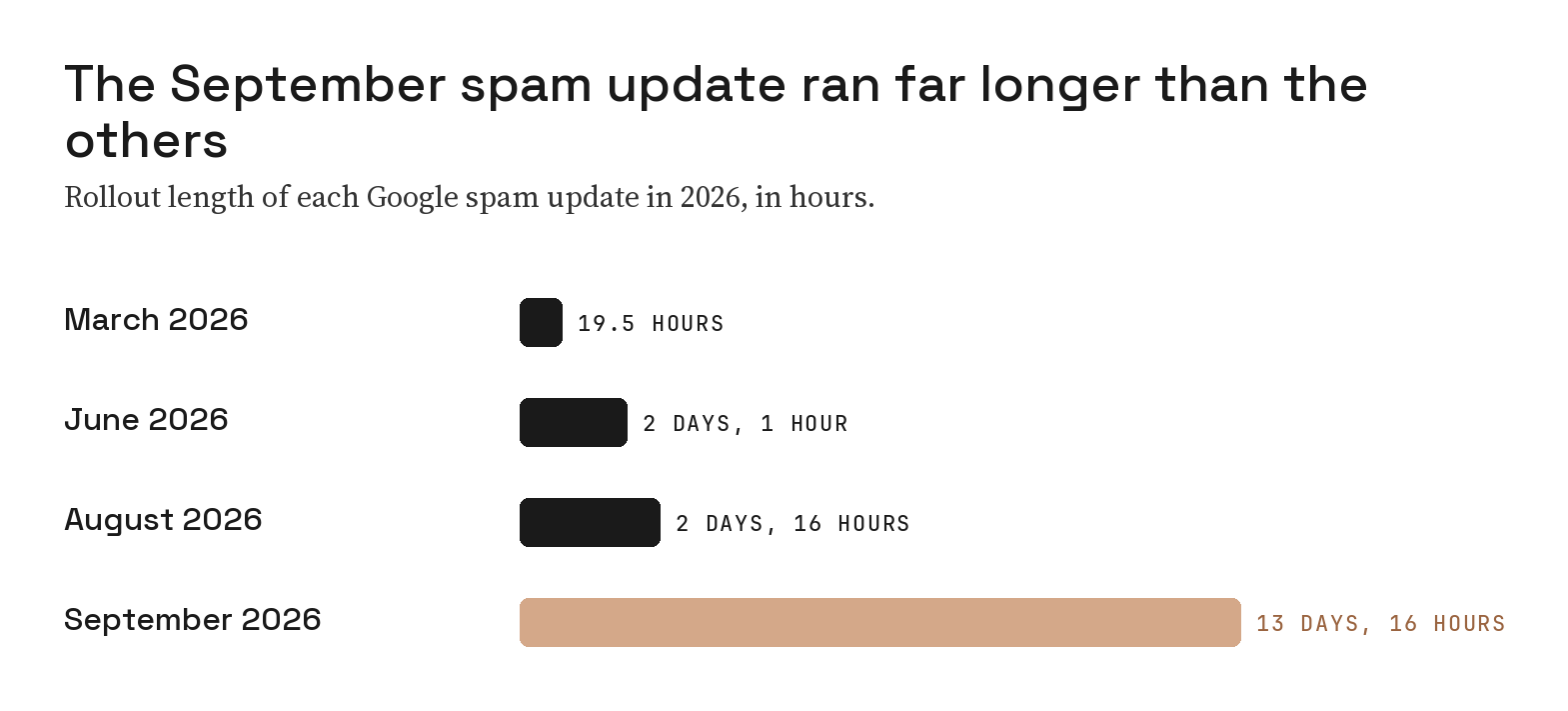
That length is the unusual part. Google's ranking update history lists the September rollout at 13 days and 16 hours. The year's three earlier spam updates took 19 and a half hours in March, about two days in June and two days and 16 hours in August, according to Search Engine Journal's tally. Google hasn't said what this update targeted or why it ran so much longer. Its documentation describes spam updates in general terms, as improvements to automated systems such as SpamBrain.
So the honest starting point for any Google algorithm update post-mortem is that nobody outside Google knows the target. What you can know is whether your own site moved, and when.
Early impact data, and why to read it carefully
The best early numbers come from Diib, which looked at 32,569 sites with connected Google Analytics and compared September 24 to 26 with the same days a week before. The median share of visits coming from unpaid Google search slipped from 34% to 31%. The share of sites that lost half or more of that traffic doubled, from 5% to 10%. Diib called it "an early read, not a verdict," and it can't say which of those sites Google actually flagged.
Rank trackers added noise. As Search Engine Journal reported, one rank-tracking vendor said many tools showed sudden ranking changes from September 26 that real searchers didn't see, because Google was returning incomplete results to automated queries. If your only evidence of a drop is a third-party chart from that week, you may be looking at a measurement problem.
September was also crowded. AI Overviews began appearing on far more branded searches in the same weeks, which can cut clicks without any change in rankings. A drop in clicks during the rollout window doesn't prove the spam update caused it.
Google spam update recovery starts with triage
Before you rewrite anything, work out whether your Google ranking dropped because of the update at all. Search Console is the main witness. Compare clicks and impressions for the two weeks before September 24 with the days after October 8, and look for a decline that lasts several days and shows up in both numbers.

Scope tells you a lot. A spam classifier tends to hit patterns: a directory of near-identical location pages, a coupon section run by a partner, a few hundred AI-written articles published in one burst. If the losses cluster in one section or page type, start there. If one keyword fell and the rest held, it's more likely ordinary competition.
Check the Manual actions report in Search Console too. A notice there means a human reviewer took action, which follows a different path: you fix the issue and file a reconsideration request.
If the update did hit you, what Google says to fix
Google's spam policies name the patterns its systems look for. The ones that most often catch otherwise legitimate businesses are scaled content abuse (mass-produced pages with little value, whether written by AI, scraped or stitched together), the site reputation policy (third-party content hosted mainly to borrow the host site's ranking strength), expired domain abuse, and link spam. Google's generative AI guidance adds that publishing many AI-generated pages without adding value for users may violate the scaled content policy.
Recovery is slow by design. Google's spam update documentation says sites that fix problems may see improvement once its automated systems learn, "over a period of months," that the site complies. For link spam the news is worse: once Google's systems discount spammy links, the ranking benefit they gave you is gone and can't be regained. Remove or noindex the problem pages, clean up the link profile, and then measure over months.
Separating update damage from everything else in Semrush One
The hard part of any update analysis is attribution. You need to see SERP volatility across the market, your own rankings by day, which pages lost positions, and whether your visibility in AI answers moved at the same time. Semrush One puts the SEO Toolkit and the AI Visibility Toolkit in one plan, so those views share a project and a timeline.
The 7-day free trial is a practical way to run this post-mortem now, while the September 24 to October 8 window is still fresh in your data.
Three Semrush reports for a spam update post-mortem
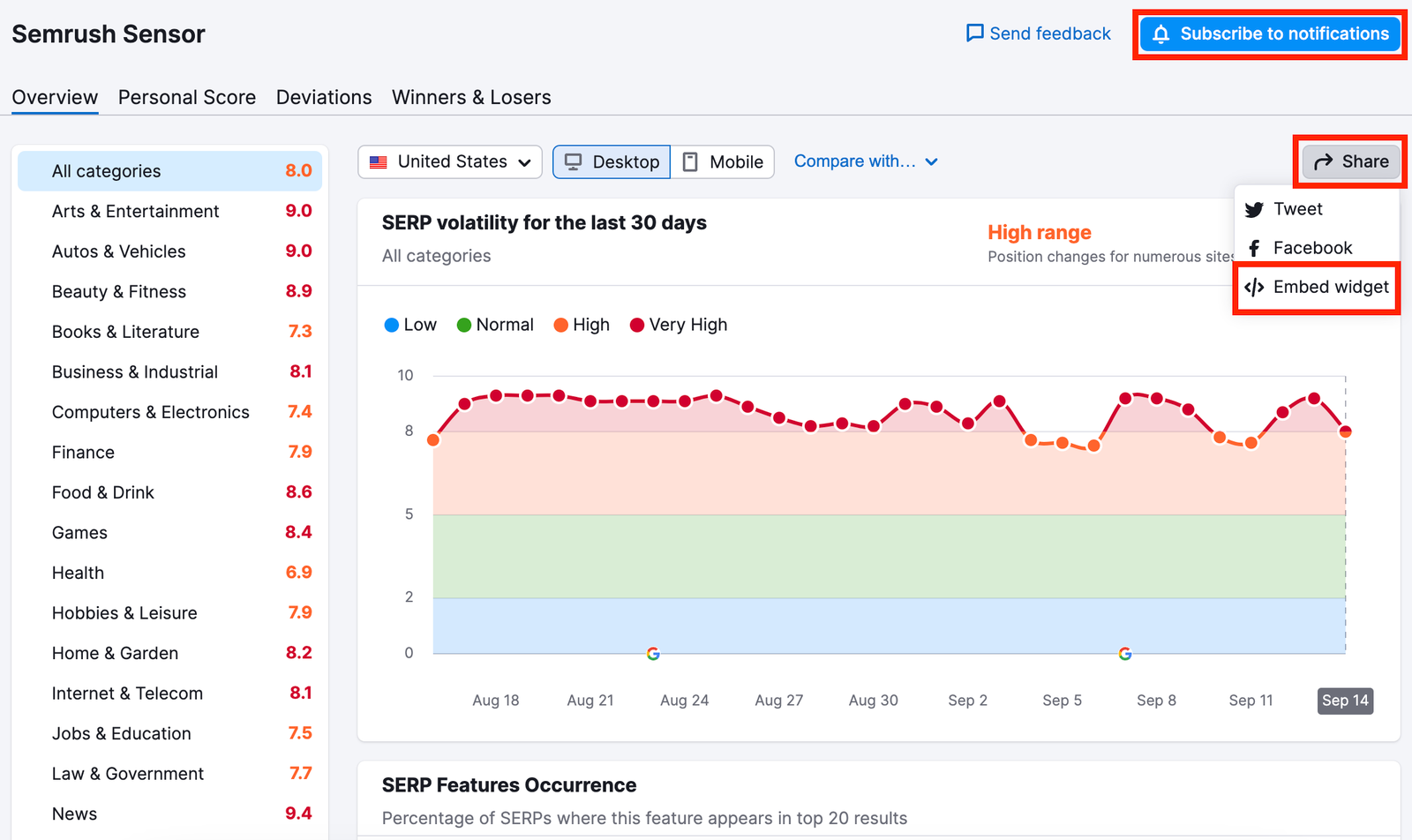
Semrush Sensor scores daily SERP volatility from 0 to 10 for each industry category, where 5 to 8 counts as high and 8 to 10 as very high. Check whether your category spiked during the rollout. If you track keywords in Position Tracking, Sensor's Personal Score applies the same measure to your own keyword set, which separates market-wide churn from problems specific to you.
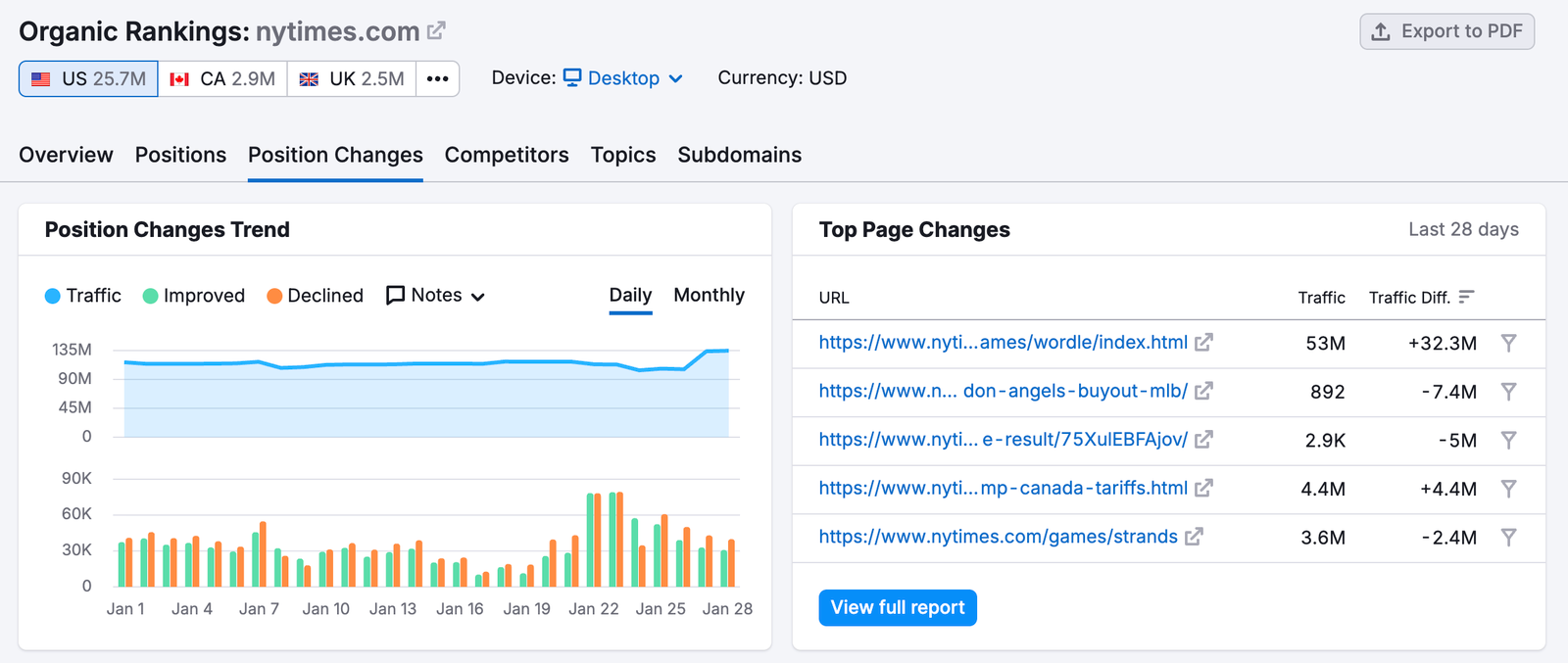
The Position Changes report in Organic Research shows your domain's improved and declined keywords as a daily trend, plus the pages that gained or lost the most traffic. Set the date range to cover the rollout and you'll see quickly whether losses cluster on one directory or page type.
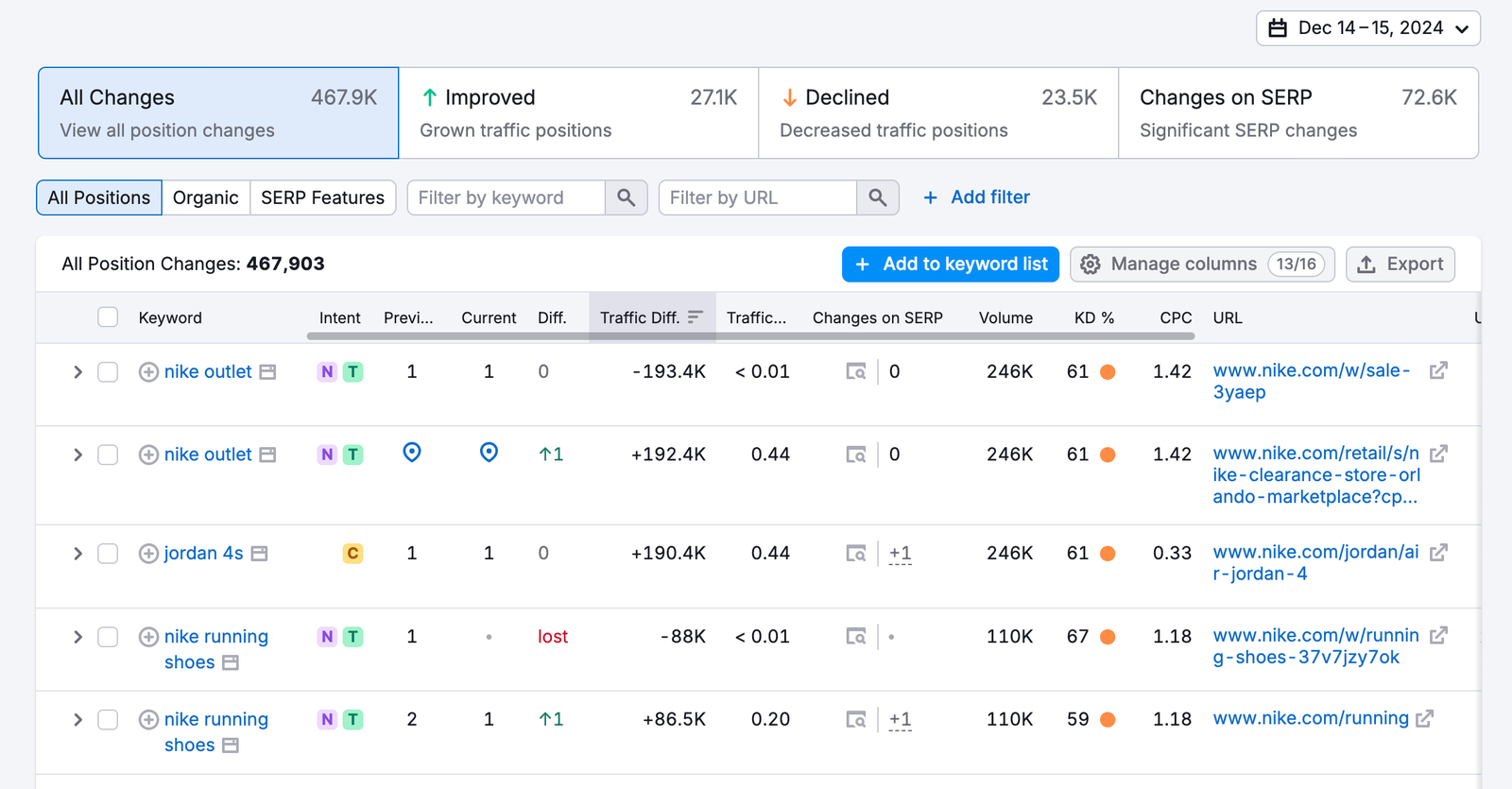
The table underneath breaks those changes down by keyword into Improved, Declined, New and Lost, with previous and current position, traffic difference and the ranking URL. Export the Lost and Declined rows for the rollout window and you have the list of pages to review against the spam policies.
Two more checks round it out. Position Tracking records your target keywords daily and lets you add a note on September 24, so every future chart shows the update. The AI Visibility Toolkit's Visibility Overview shows whether your mentions in ChatGPT, AI Overviews, AI Mode and Gemini moved in the same weeks, which matters because AI answers lean on pages that rank.
Sources for this section
Where this leaves you
- The September 2026 spam update ran 13 days and 16 hours, far longer than the year's other three, and Google hasn't said what it targeted.
- Confirm a drop in Search Console before acting. Rank-tracker data from late September is unreliable.
- Look for patterns by section and page type. Spam systems usually hit groups of pages.
- If you're affected, fix against the named spam policies and expect recovery to take months.
- Annotate September 24 to October 8 in every dashboard you use, so future analysis starts from the right dates.
Sources
Brian Weerasinghe is the founder and editor of AI Eating The World, where he covers artificial intelligence, tech companies, layoffs, startups, and the future of work. His reporting focuses on how AI is transforming businesses, products, and the global workforce. He writes about major developments across the AI industry, from enterprise adoption and funding trends to the real-world impact of automation and emerging technologies.