Image: Flickr / Wikimedia Commons / Unsplash
Google AI Overview Sources: Who Google Quotes When People Search Your Brand
AI Overviews showed up on most tracked branded searches by late September. The summaries lean heavily on sites you don't own, and auditing them takes an afternoon.
Image: Flickr / Wikimedia Commons / Unsplash
This article contains affiliate links to Semrush. AI Eating The World may earn a commission on qualifying purchases, at no extra cost to you.
AI Overviews jumped from 26% to 90% of tracked branded keywords in September 2026. Here's how to find the Google AI Overview sources describing your brand and fix the ones that get it wrong.
Your branded search results now start with someone else's summary
For most companies, branded search was the one part of Google that ran itself. Someone typed your name, your homepage came first, and the story on the page was yours. That changed fast in September 2026. DemandSphere's daily tracking of branded keywords found an AI Overview on 26.1% of them on September 1 and 90.5% on September 27, before settling at about 82% on the 29th. Google hasn't announced a change.

The data has limits worth stating. DemandSphere doesn't publish the size of its keyword set, and an Overview counts as present whether or not the brand is cited inside it. We covered what this does to branded click-through rates earlier this month. This piece is about the other half of the problem: the Google AI Overview sources that end up describing your company, and how to find out who they are.
Sources for this section
Most of what AI says about a brand comes from other sites
There's good reason to assume your own site is a minority voice in those summaries. A June 2026 paper on arXiv analyzed nearly 190,000 AI citations about 128 brands across 12 markets and 13 languages. In the main dataset, 85.7% of the URLs that language models cited pointed to sites the brand didn't own. Only 14.3% were the brand's own pages. The split was similar for B2B brands (86.9% third-party) and B2C brands (84.3%).
That study covers several AI assistants and mostly European markets, so treat it as a direction, not a benchmark for Google in the US. It lines up with how Google describes the feature, though. Its documentation on AI features says any page that's indexed and eligible to show a snippet can appear as a supporting link in AI Overviews, and that the system may run several related searches to build an answer. A query like "[your brand] reviews" or "[your brand] vs [competitor]" invites review platforms, forum threads, press coverage and competitor comparison pages into the summary.
Some of those sources will be fair. Some will be two years out of date, and the Overview will repeat an old price or a feature you've since fixed. You won't know which until you look.
How to audit the AI Overview citations on your brand
Start with a list of 20 to 30 branded queries from Search Console. Include your brand name alone and the common pairings: reviews, pricing, alternatives, "vs" each major competitor, login, and complaints. Check each one in a clean browser in the US and log what you find.
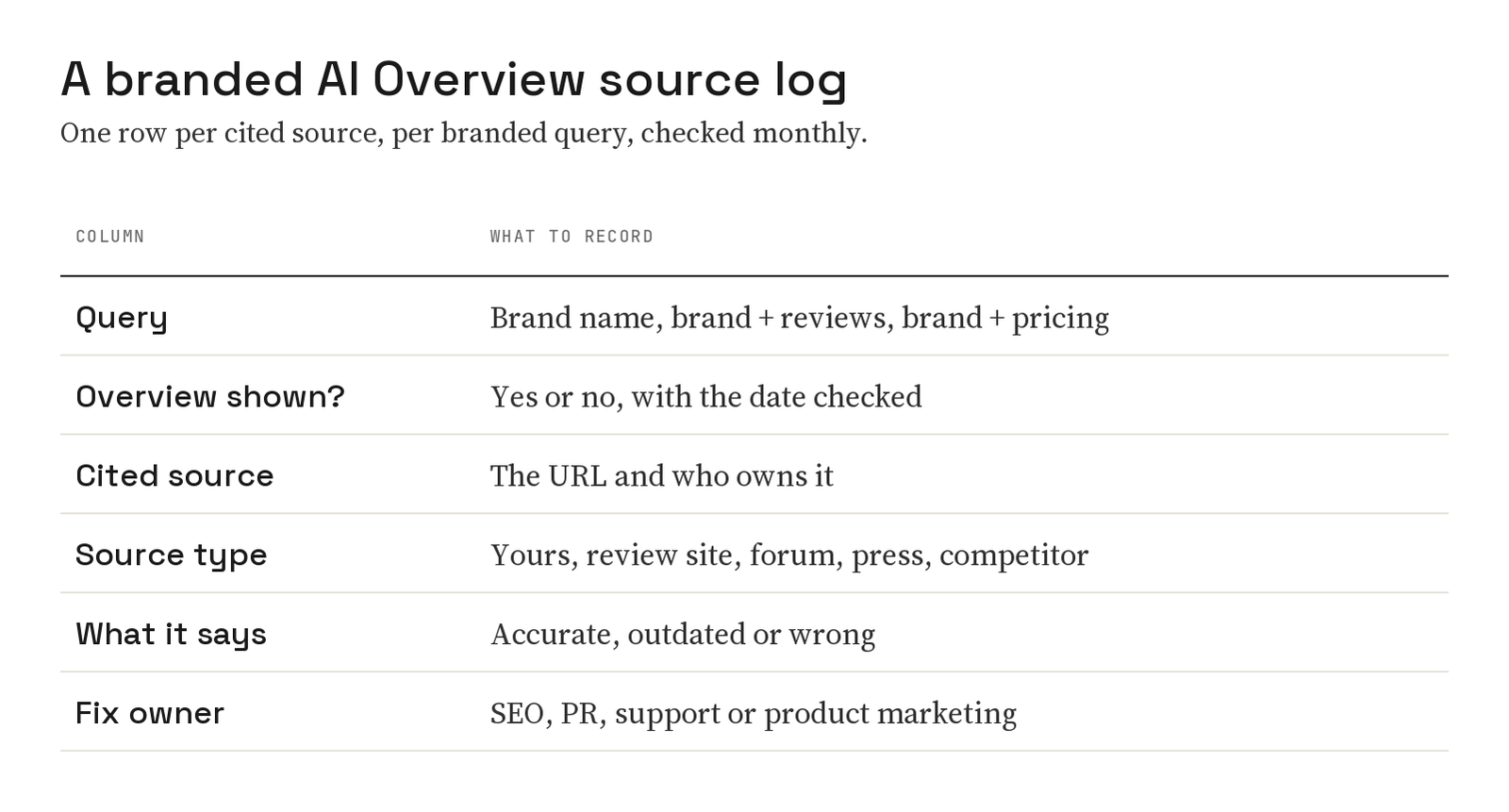
After one pass you'll usually see a pattern. A single review platform might supply most of the citations for "reviews" and "pricing" queries. An old Reddit thread might keep surfacing for "complaints." A competitor's comparison page might be the only source for a "vs" query. Each of those has a different fix, which is why the last column matters.
- Review platforms: claim and update your profiles on G2, Capterra or the sites your category uses, and keep pricing and feature lists current.
- Forum threads: answer openly from a named company account where the community allows it, and fix the underlying issue people are describing.
- Competitor comparisons: publish your own honest comparison page, with a clear date, so there's a fairer source to cite.
- Your own pages: give pricing, plans and policies their own crawlable pages with plain-language answers and a visible last-updated date.
Online reputation management for AI answers is a team sport
Very little of that list is classic SEO work. Review profiles often belong to product marketing, forum replies to support or community, press coverage to PR. That's why branded search reporting needs a new owner map. If an AI Overview keeps repeating a two-year-old complaint, the fix may be a support process, and the SEO team's job is to show everyone the evidence.
Run the audit monthly at first. Once you know which sources Google leans on for your brand, you can check them less often and spend the time on getting cited in AI Overviews for the non-branded questions buyers ask before they know your name.
Tracking branded search sources with Semrush One
Checking 30 queries by hand every month gets old fast, and it only covers Google. Semrush One bundles the SEO Toolkit, which shows which of your keywords trigger AI Overviews and whether they link to you, with the AI Visibility Toolkit, which records the sources AI assistants cite when they talk about your brand.
The 7-day free trial is enough to load your branded queries, see where Overviews appear without linking to you, and pull a first list of the outside sources shaping your brand story.
Four Semrush reports for branded AI visibility
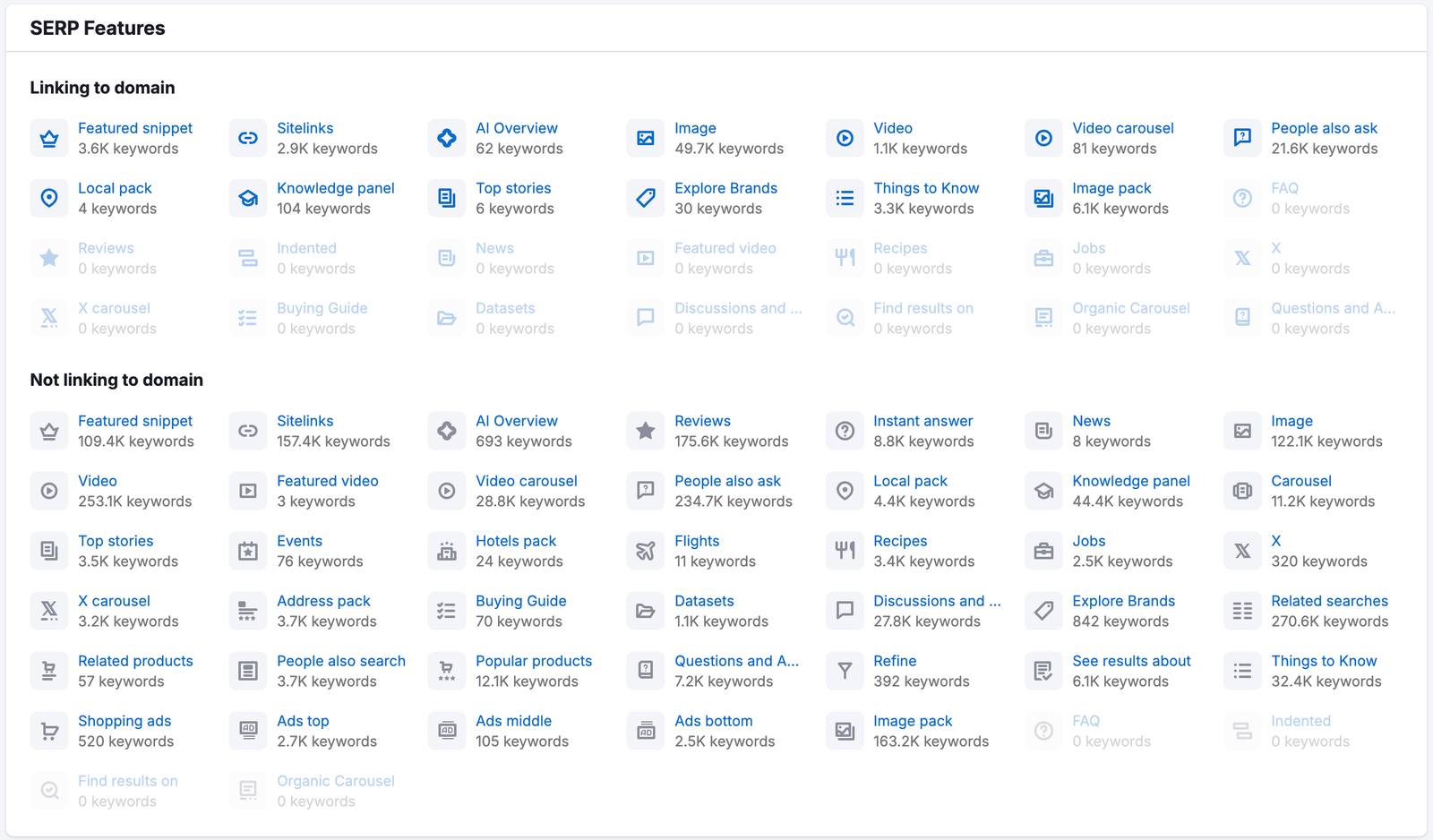
The SERP Features widget in Organic Research splits features into those linking to your domain and those that don't. Compare the AI Overview count in each group. A large gap means Google is summarizing a lot of your keywords without citing you, and the keyword list behind each count is one click away.
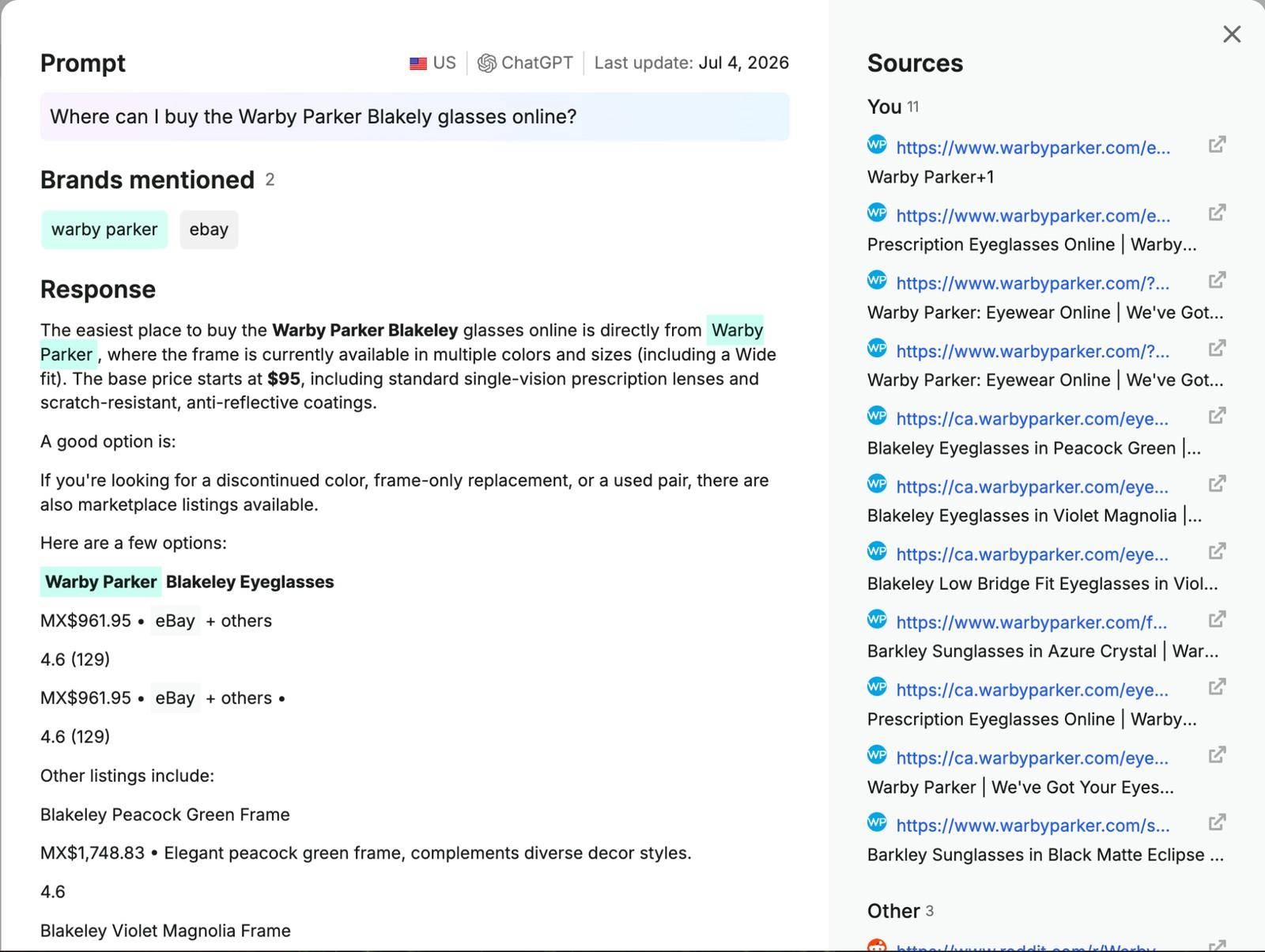
In the AI Visibility Toolkit, the Visibility Overview report lets you open any tracked prompt and read the full AI answer, the brands it mentioned and every source it cited, split into your own pages and others. Branded prompts like "where can I buy [product] online" show quickly whether the answer leans on your site or on resellers and marketplaces.
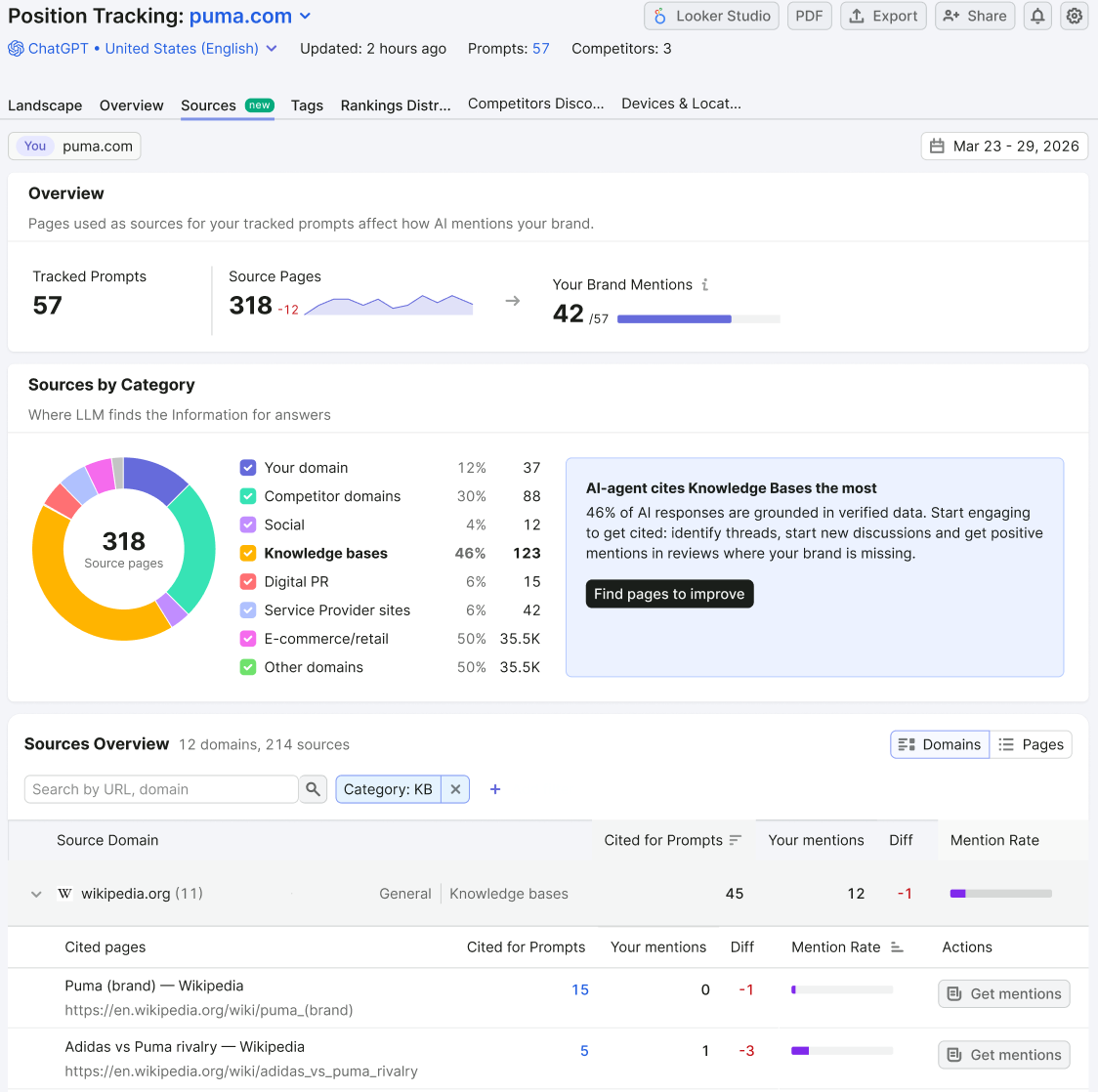
Prompt Tracking adds a Sources tab that groups every page cited for your tracked prompts by category: your domain, competitor domains, social, knowledge bases like Wikipedia, digital PR and more. Each cited page shows your mention rate, which tells you where a correction or a new mention would make the most difference.
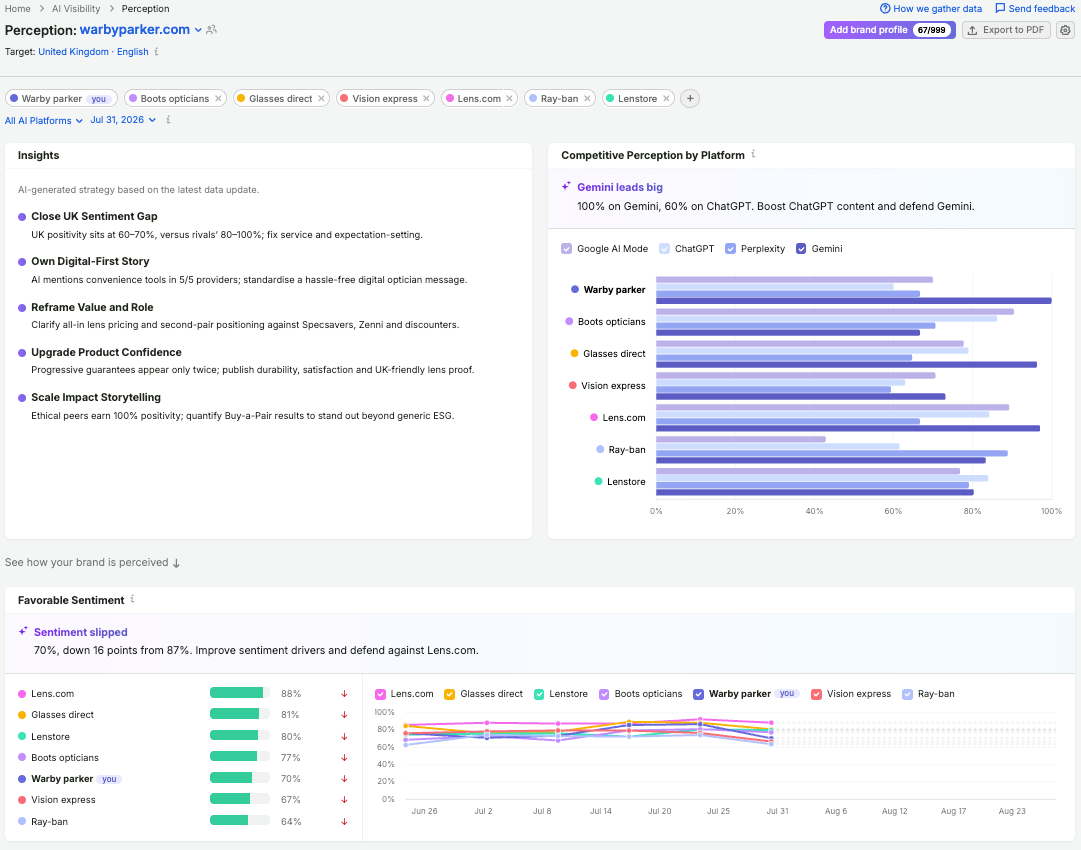
Finally, the Perception report in Brand Performance tracks favorable sentiment for your brand against competitors on Google AI Mode, ChatGPT, Perplexity and Gemini, with AI-generated suggestions on where perception lags. It's the check that tells you whether fixing those sources actually changed how the assistants talk about you.
Sources for this section
What to take into next month's branded search review
- AI Overviews appeared on most tracked branded keywords by late September. Check your own list before quoting anyone's percentage.
- Expect most of what AI says about you to come from sites you don't own.
- Log every cited source for your top branded queries, label its owner, and judge whether it's accurate.
- Route fixes to the team that owns the source: product marketing, support, PR or SEO.
- Re-check monthly until you know which sources Google relies on for your brand.
Sources
Brian Weerasinghe is the founder and editor of AI Eating The World, where he covers artificial intelligence, tech companies, layoffs, startups, and the future of work. His reporting focuses on how AI is transforming businesses, products, and the global workforce. He writes about major developments across the AI industry, from enterprise adoption and funding trends to the real-world impact of automation and emerging technologies.