Image: Flickr / Wikimedia Commons / Unsplash
OpenAI Donut Device: Reported $400 AI Hardware Details
OpenAI has confirmed its hardware collaboration with Jony Ive's team. The donut shape, screen-free speaker design, $300 to $400 price, and 2027 launch remain reported details.
This article was produced by the AETW editorial team.
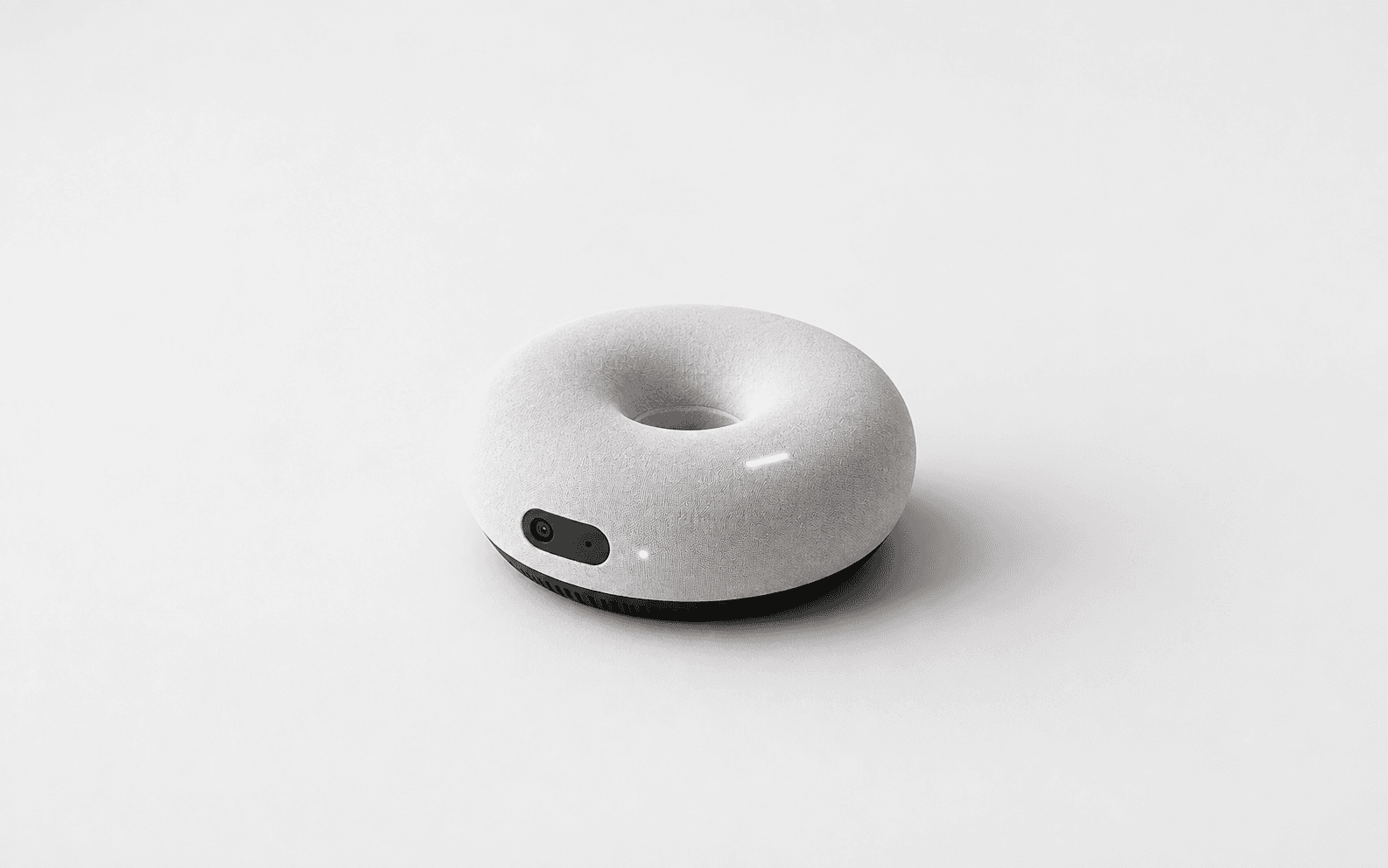
OpenAI and Jony Ive's team are developing new hardware, but OpenAI has not announced a final product name, form factor, price, or release date. Bloomberg-sourced reporting describes a donut-shaped smart speaker priced around $300 to $400.
Confirmed versus reported
Confirmed: OpenAI says the io Products team merged with OpenAI in July 2025 and that Jony Ive and LoveFrom assumed deep design and creative responsibilities across the company. OpenAI has publicly described the work as developing new products, but it has not announced a final consumer device name, specification sheet, price, or release date.
Reported: Bloomberg-sourced coverage describes a battery-powered, screen-free smart speaker with a donut-like form, moving parts, cameras and sensors, a likely price of $300 to $400, and a possible 2027 release. Those details come from reporting, not an OpenAI product announcement, and can change.
Sources for this section
ChatGPT Voice Mode, but with a body
The simplest way to understand the OpenAI smart speaker is as a physical home for ChatGPT’s voice experience. Reuters previously reported that the product is intended to act as a more humanlike AI companion inside the home, with the ability to answer questions, respond to messages, play media, control smart-home devices, and use cameras and sensors to understand what is happening around it.
That makes the hardware less interesting as a speaker and more interesting as an interface. A phone already has microphones, cameras, speakers, and access to ChatGPT. OpenAI’s bet appears to be that a dedicated, screenless AI device can remove enough friction to make conversation with an AI assistant feel ambient instead of app-based.
The moving parts matter for the same reason. A light that turns on, a component that shifts position, or another physical response can signal attention without adding a screen. If OpenAI wants the device to feel more like a presence than another gadget, physical feedback becomes part of the product experience.
Sources for this section
OpenAI is spending billions to own the interface
OpenAI’s hardware push is not a side experiment. In 2025, the company acquired io, the AI device startup founded by former Apple design chief Jony Ive, in a deal valued at about $6.5 billion. Ive’s design firm LoveFrom has continued to work with OpenAI, while former Apple designers and engineers have joined the broader hardware effort.
The strategic logic is straightforward. OpenAI currently reaches most consumers through devices and operating systems controlled by Apple, Google, Microsoft, and others. Its own ChatGPT device would give the company a direct consumer interface, control over the sensors feeding context into its models, and a new hardware revenue stream beyond subscriptions and APIs.
It also raises the stakes of OpenAI’s growing conflict with Apple. Apple sued OpenAI in July over alleged trade-secret theft tied to the hardware effort. The claims remain allegations, but the dispute shows how seriously incumbents are treating OpenAI’s move from software into physical devices.
Sources for this section
The AI hardware graveyard is the real benchmark
OpenAI is entering a category that has already punished ambitious ideas. Humane launched its AI Pin at $699 with a vision of replacing many smartphone interactions with a screenless assistant. The product struggled with reviews and adoption, and Humane later shut down the consumer device business as HP acquired parts of the company for $116 million.
That history makes the reported $300 to $400 price important. It is still expensive compared with mainstream smart speakers, but it is far below the Humane AI Pin’s launch price. OpenAI also has advantages Humane did not: a large existing ChatGPT user base, a mature voice product, frontier models, existing subscriptions, and the distribution power of one of the world’s best-known AI brands.
But better models do not automatically create a reason to own another device. OpenAI still has to answer a basic question: what can this AI companion do better because it is physical? If the answer is only "ChatGPT Voice without taking out your phone," a $400 purchase will be difficult to justify.
Sources for this section
What to watch before 2027
Three things will determine whether the donut becomes a real consumer category or another memorable AI hardware experiment.
- Privacy and context: cameras and microphones can make the assistant more useful, but OpenAI will need clear controls for when the device is watching, listening, storing, and sending data.
- Model advantage: the device needs interactions that feel meaningfully faster, more contextual, or more capable than ChatGPT on a phone.
- Price and recurring cost: a $300 to $400 device is only part of the equation if the best features also require a paid ChatGPT plan.
- Developer ecosystem: the long-term opportunity gets larger if third-party apps, agents, or services can use the device as a persistent voice and vision interface.
- Launch timing: current reporting points to 2027, so the final design, pricing, and feature set can still change substantially.
Sources for this section
Sources
Brian Weerasinghe is the founder and editor of AI Eating The World, where he covers artificial intelligence, tech companies, layoffs, startups, and the future of work. His reporting focuses on how AI is transforming businesses, products, and the global workforce. He writes about major developments across the AI industry, from enterprise adoption and funding trends to the real-world impact of automation and emerging technologies.