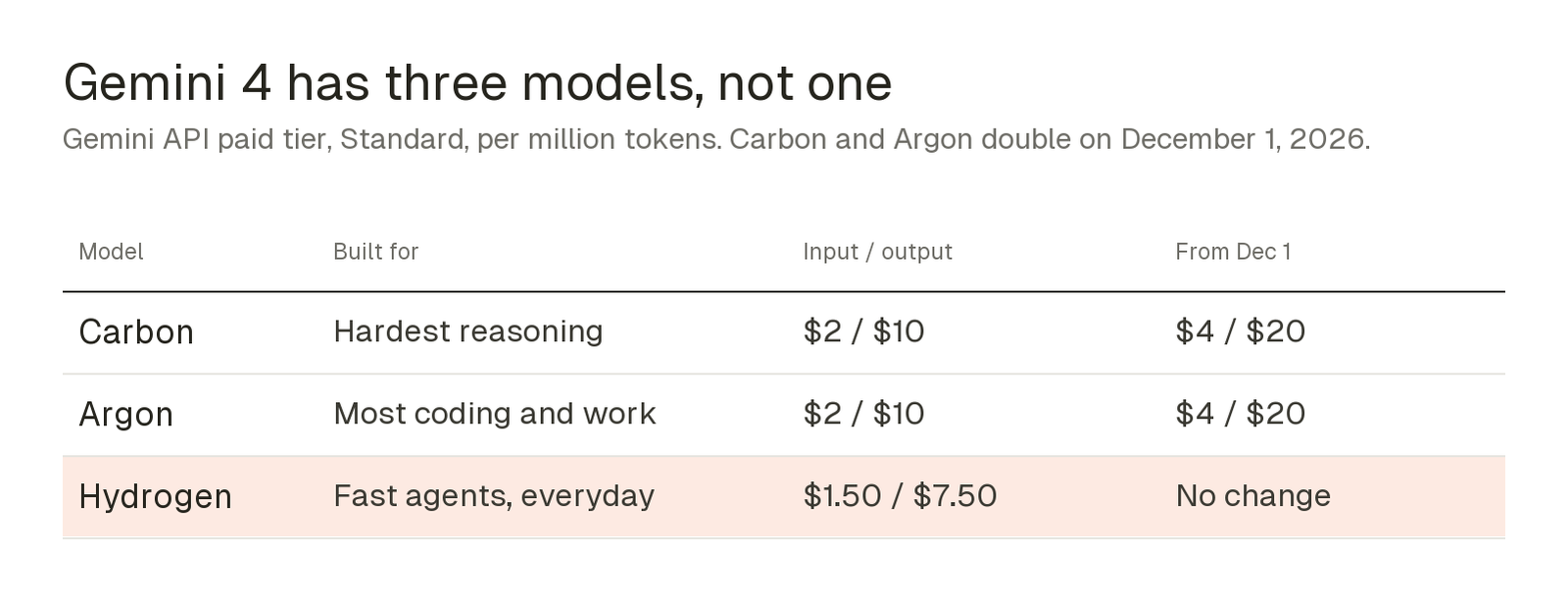
Gemini 4 is three models: Carbon for the hardest reasoning, Argon for most coding and knowledge work, and Hydrogen for fast, cheaper agent work. Carbon and Argon API prices double on December 1, 2026, while Hydrogen stays at $1.50 and $7.50 per million tokens and has a free tier.
Gemini 4 is three models
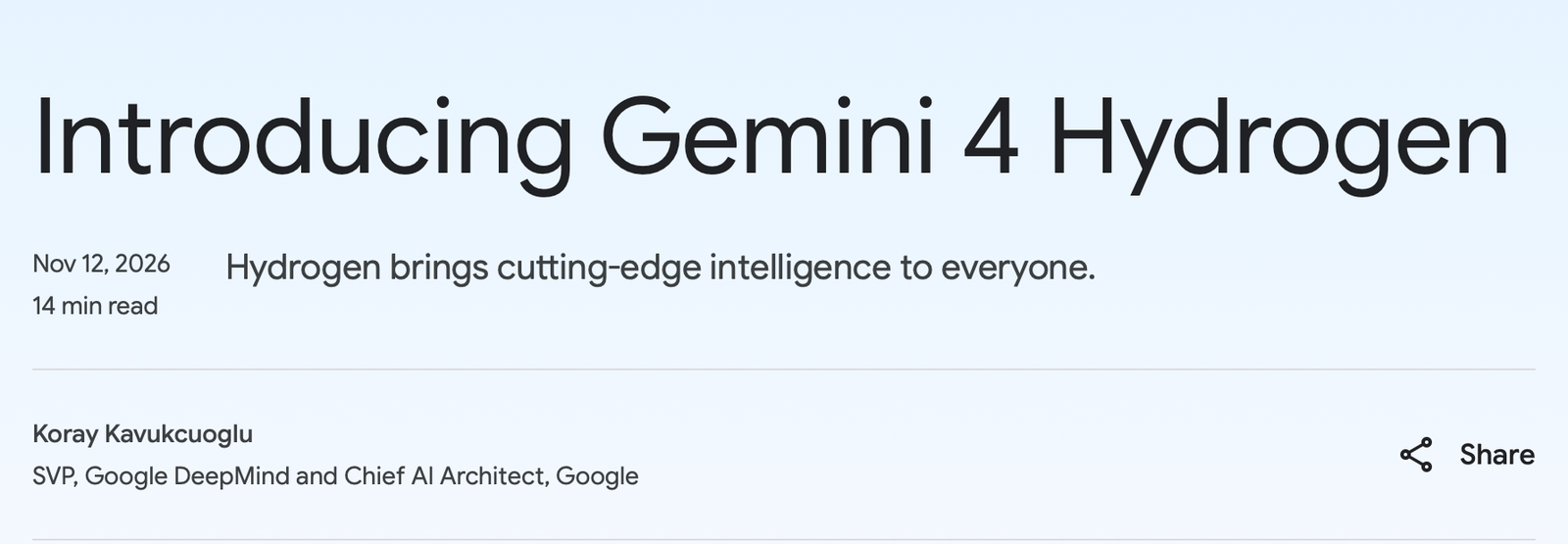
If you searched for Gemini 4 and found three different names, you read it right. Google released Gemini 4 as three separate models over one month: Argon on October 13, 2026, Carbon on November 10 after a limited preview that began October 28, and Hydrogen on November 12.
They share a lot. All three accept text, images, video, audio and PDFs, return text, and have the same 1,048,576-token context window. What separates them is reasoning depth, speed and price. Google's docs call Carbon its most capable reasoning model and describe Argon as the efficient choice for most coding and knowledge work. Hydrogen is pitched on speed and efficiency for everyday coding and agentic workflows.
For US developers and teams, the release order matters less than one date: December 1, 2026. That is when API prices for Carbon and Argon double. If you are choosing a Gemini 4 model for anything that runs at volume, that change should drive the decision.
Gemini 4 Carbon vs Argon vs Hydrogen: which one does what
Gemini 4 Carbon is the top model. Google built it for complex software engineering, deep math and science problems, and very long outputs. Through long decode, all three models can generate up to the full 1M-token window, but Carbon is the one Google pitches for that work.
Gemini 4 Argon is the workhorse. Google's November 10 post calls it the ideal choice for the majority of software engineering and knowledge work, with faster responses and lower token spend per turn than Carbon. Save Carbon for the tasks that break Argon.
Gemini 4 Hydrogen is the speed tier. Google says it finishes tasks 2.5 times faster than Gemini 3.8 Flash, and built it for everyday coding and agent work. It is also the only Gemini 4 model with a free API tier.
Thinking levels differ too. Hydrogen offers low, medium, high and xhigh, with high as the default. Carbon and Argon offer low, medium and high, with medium as the default. None of the three accepts a "minimal" thinking setting; Google's Vertex docs say that request returns an error.
What none of them do: generate images or audio, or run on the Live API. Output is text only. Google also has not published a knowledge cutoff on the announcement or model pages we read.
Gemini 4 pricing doubles on December 1, for two of the three
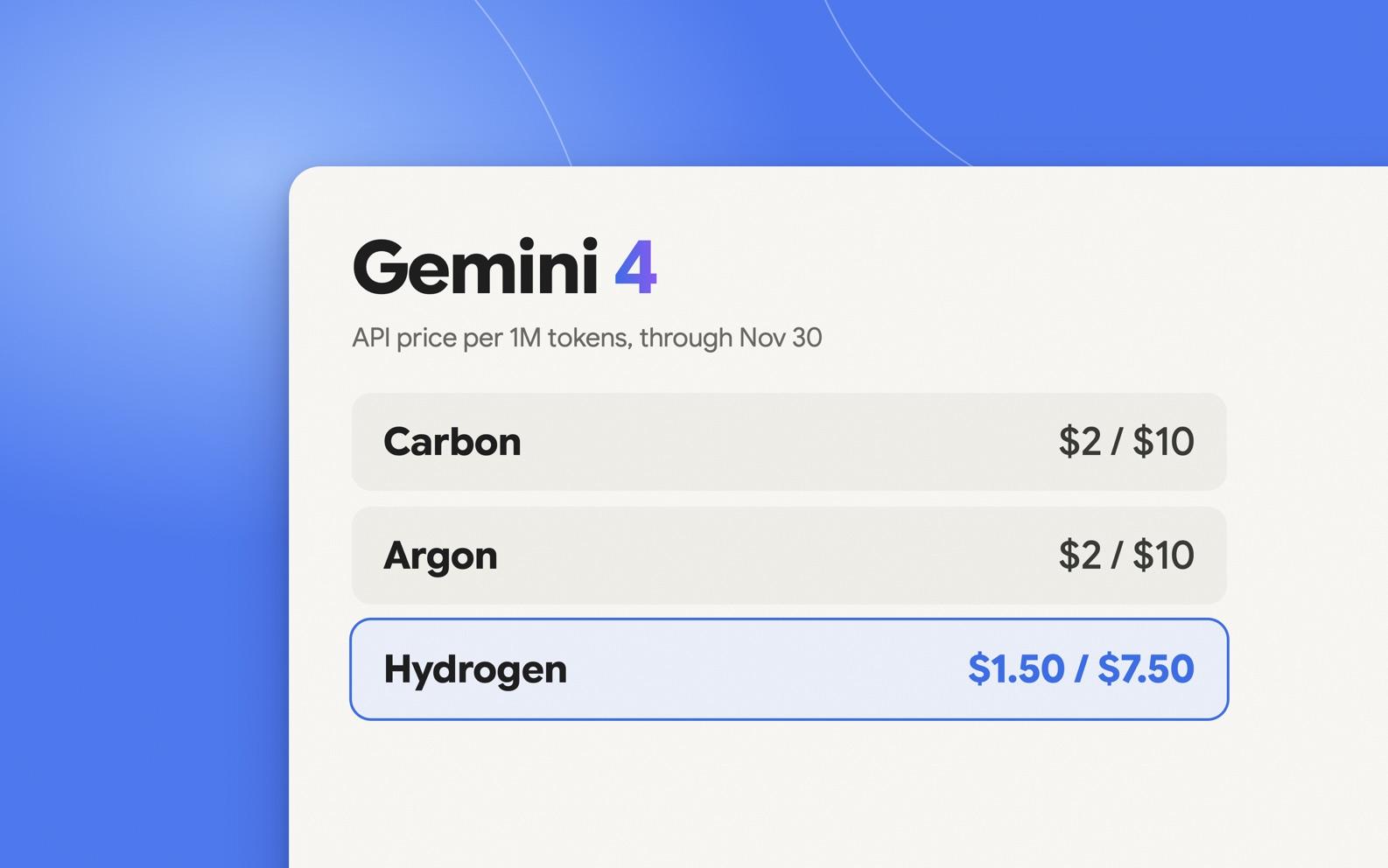
On the Gemini API paid tier, Carbon and Argon cost the same: $2 per million input tokens and $10 per million output tokens through November 30, 2026. Starting December 1, both go to $4 and $20. Output pricing includes thinking tokens, and Google bills every token the model processes, so a model that thinks longer costs more per answer even at the same rate.
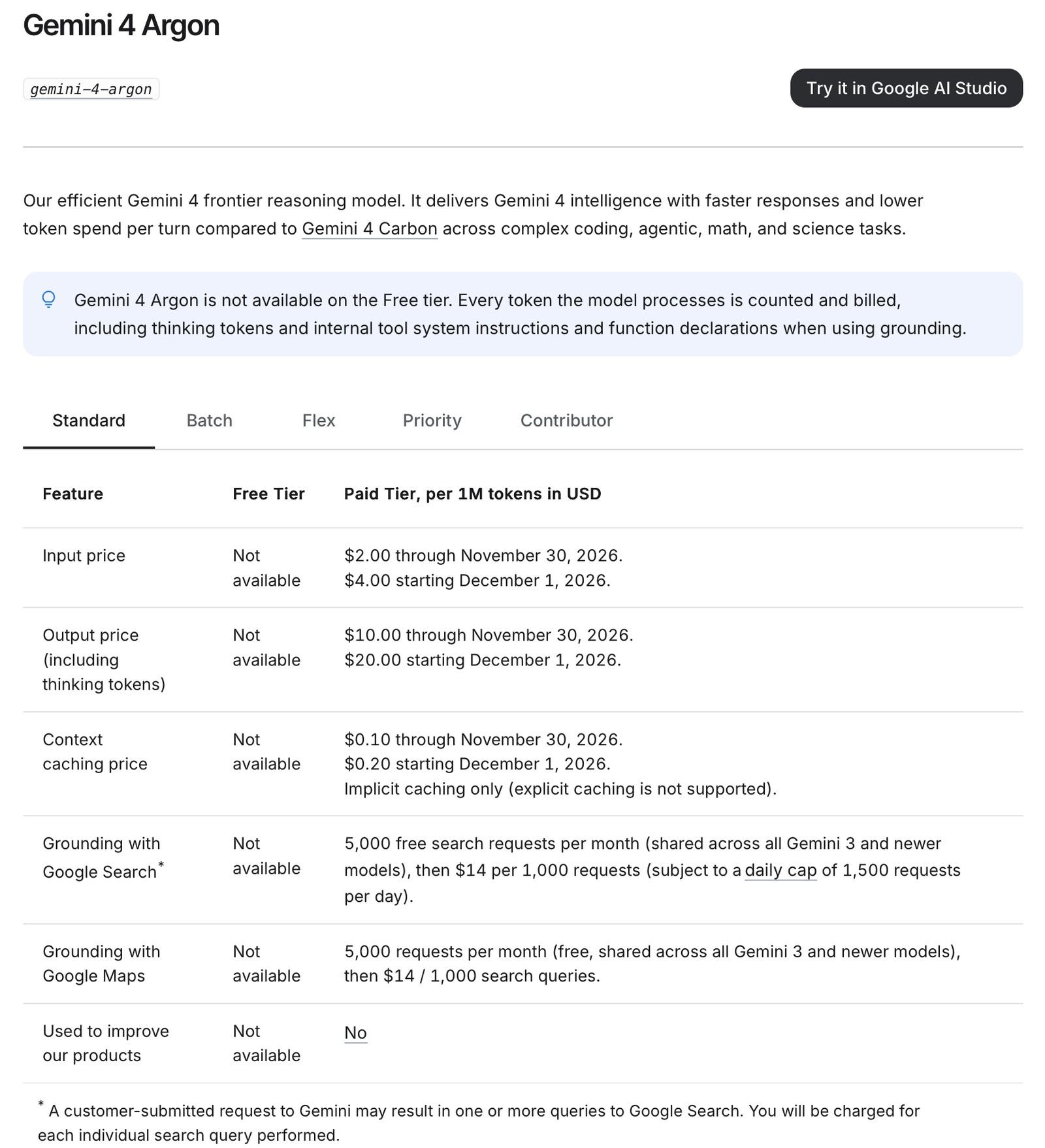
Hydrogen costs $1.50 input and $7.50 output, flat across its whole 1M-token window, and the pricing page shows no scheduled change. It is also free on the Gemini API free tier, with the trade-off Google states plainly: free-tier data is used to improve its products. Carbon and Argon are not available on the free tier at all.
Batch and Flex processing run at half the Standard rate for all three models. Context caching is automatic: Google applies implicit caching at $0.10 per million cached tokens for Carbon and Argon until December 1, and $0.075 for Hydrogen. Explicit caching is not supported.
Who can use Gemini 4 today
Access depends on which model you want and where you want it. Hydrogen is the easy one: it is in the Gemini app model picker for everyone (free users reach it through automatic model selection), in Google Search, and on every Gemini API tier.
Argon and Carbon sit behind paid plans. Inside Google's own apps, the split looks like this:
- Gemini app and AI Mode: Argon for AI Pro and AI Ultra subscribers; Carbon for AI Ultra only.
- Gemini API: Argon and Carbon on the paid tier only; Hydrogen on all tiers, including free.
- Google Antigravity: Argon and Carbon for AI Ultra; Hydrogen for AI Pro and Ultra.
- Vertex AI (now Gemini Enterprise Agent Platform): Hydrogen and Argon are generally available; Carbon is limited to verified enterprise customers in select regions.
- Google's Fairwind Program gives allowlisted security teams cyber-focused access to Carbon and Argon. That is how Carbon first shipped, on October 28.
What the Gemini 4 benchmarks do and don't tell you
Google leans on the Artificial Analysis Intelligence Index to place the three models. By Google's numbers, Carbon scored 59 at launch, Hydrogen 51 at its default setting and 54 at xhigh, and Argon 50. So the cheapest, fastest model edges out the middle one on this index.
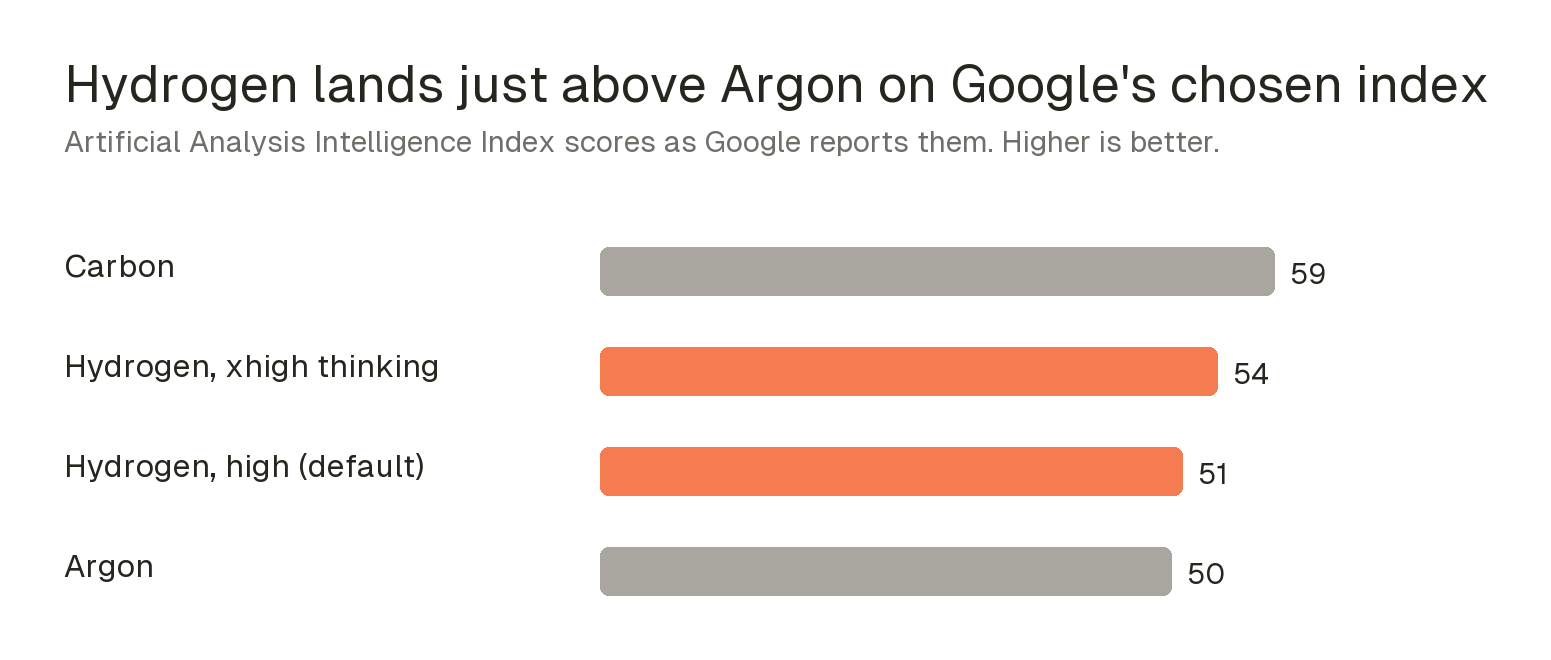
These are results Google picked, the Carbon and Hydrogen figures come from posts two weeks apart, and the Hydrogen post names its rivals only as "competing models in its class." A single index score also hides the cost of thinking: Hydrogen at xhigh scores higher but spends more output tokens to get there.
The more useful claims are about cost per task. Google says Carbon ranked first on CursorBench 4.0, Perplexity WANDR and Zapier AutomationBench at more than 2x lower cost per task than the next best external model, and that Hydrogen hit 57% on Terminal-Bench 4.1 against 18.2% for Gemini 3.8 Flash. These are Google's own results, so test them on your own work.
Which Gemini 4 model to start with
If you are trying Gemini 4 for the first time, start with Hydrogen. It is free on the API, it is in the Gemini app for everyone, and by Google's own numbers it matches Argon on general intelligence while running faster. Move up only when you hit a task it gets wrong.
If you build on the API at volume, run your tests before November 30. After December 1, Argon and Carbon cost more than twice Hydrogen's output price per token. For a coding agent, the realistic setup is Hydrogen for the bulk of steps and Carbon or Argon for the few that need deep reasoning, which is the orchestration pattern Google itself describes for Antigravity.
To see how Gemini fits next to the other AI coding tools and plans, start with the links below.
Sources
- Google: Gemini 4 Argon, built to solve your hardest problems (October 13, 2026)
- Google: Gemini 4 Carbon, our next frontier model (October 28, 2026)
- Google: Gemini 4 Carbon is now available (November 10, 2026)
- Google: Introducing Gemini 4 Hydrogen (November 12, 2026)
- Google: Build with Gemini 4 Hydrogen (November 12, 2026)
- Google AI Studio: Gemini Developer API pricing
- Google AI Studio: Gemini models
- Google AI Studio: changelog
- Google Cloud: Vertex AI models