Image: Flickr / Wikimedia Commons / Unsplash
Codex Pricing (October 2026): Every Plan, Usage Limit and Credit Cost
Codex comes free with ChatGPT, but only in a limited way. Here's what each plan really gets you, how the usage limits work, and what credits and API keys cost once you run out.
Image: Flickr / Wikimedia Commons / Unsplash
AI Eating The World makes and sells the Token Saver Kit mentioned in this article. Prices and limits come from OpenAI's own pages, checked October 15, 2026. OpenAI changes them often.
Codex is included with ChatGPT Free ($0) and Go ($8) in a limited form, and fully with Plus ($20), Pro ($100, $200 or $500) and Business. Usage limits depend mostly on the model you pick, and extra usage costs about $0.04 per credit.
Codex pricing at a glance
Codex pricing follows your ChatGPT plan. OpenAI doesn't sell Codex as a separate subscription. It comes with Free ($0), Go ($8 a month), Plus ($20 a month) and Pro (from $100 a month), with Pro tiers at $100, $200 and $500. Business seats cost $25 per user a month, or $20 billed annually. You can also skip the plan and pay per token with an API key.
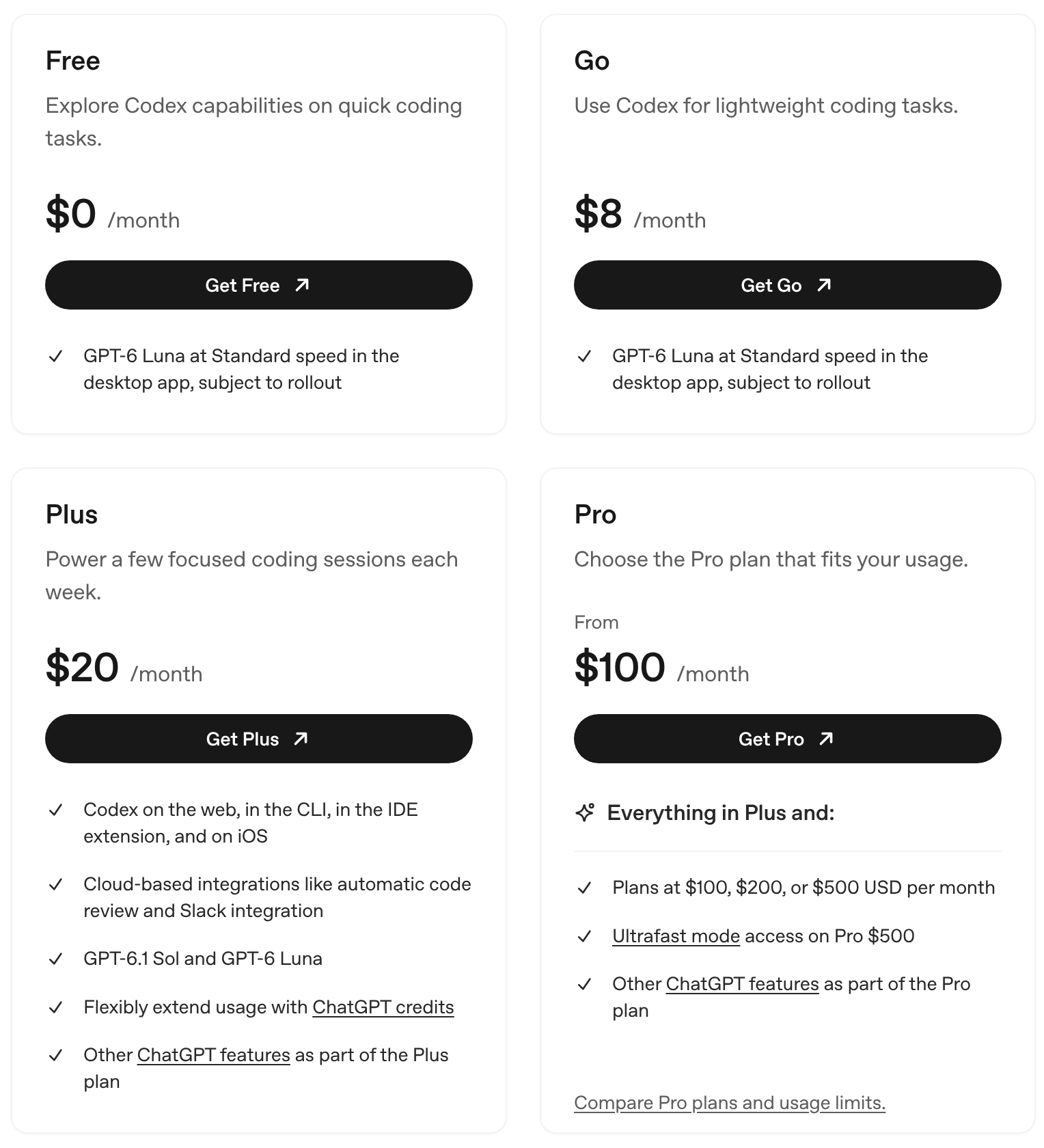
These are the prices on OpenAI's Codex pricing page as of October 15, 2026. One change landed this week: GPT-5.5 retired from Codex for ChatGPT sign-ins on October 14, so every plan now runs on GPT-6 models.
- Free: $0, GPT-6 Luna in the desktop app only.
- Go: $8 a month, same access as Free.
- Plus: $20 a month, Codex in the CLI, IDE, web and iOS with GPT-6.1 Sol and GPT-6 Luna.
- Pro: $100, $200 or $500 a month, no five-hour limit for now.
- API key: pay per token, no cloud features.
Sources for this section
Is Codex free?
Partly. The free plan and the $8 Go plan get GPT-6 Luna, OpenAI's smallest coding model, in the ChatGPT desktop app, and OpenAI says that access is still rolling out. Codex in the CLI, the IDE extension, on the web and on iOS starts at Plus. For most developers, the real Codex cost starts at $20 a month.
The other way in is an API key. You pay only for the tokens you use, but you lose the cloud features, including automatic GitHub code review and the Slack integration. Our Codex CLI setup guide covers both sign-in options.
Sources for this section
Codex usage limits depend on the model you pick
Plus counts usage in local messages per five hours, and the range is wide: 5 to 45 messages with GPT-6 Astra, 15 to 160 with GPT-6.1 Sol and 350 to 3,000 with GPT-6 Luna. Bigger codebases, long-running tasks and cloud runs use more of the allowance per message. Weekly limits may also apply, and OpenAI doesn't publish them.
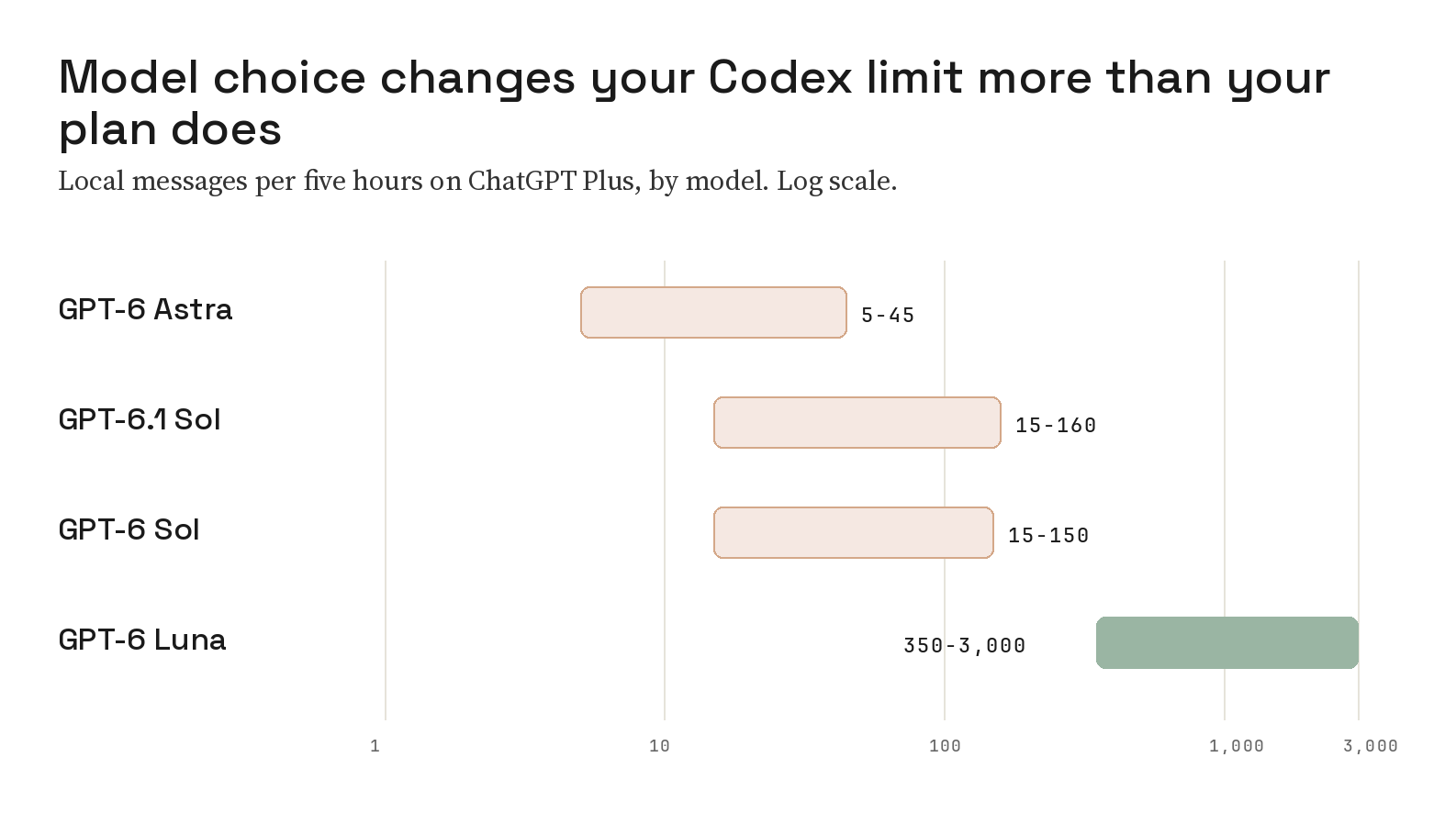
Pro has no five-hour limit for now. For Codex users, that's most of what the ChatGPT Pro price buys, along with Ultrafast mode on the $500 tier. Speed costs extra on every plan: Fast mode uses your included limits at 2.5x the Standard rate and Ultrafast at 8x.
Sources for this section
Codex credits and API pricing
When Plus or Pro runs out, you can buy Codex credits. They sell in packs of 1,000 for $40, about 4 cents each, according to WorkOS. OpenAI charges credits per token, and at that price they match its API list prices. GPT-6.1 Sol costs 50 credits per million input tokens, or $2, which is also its API price.
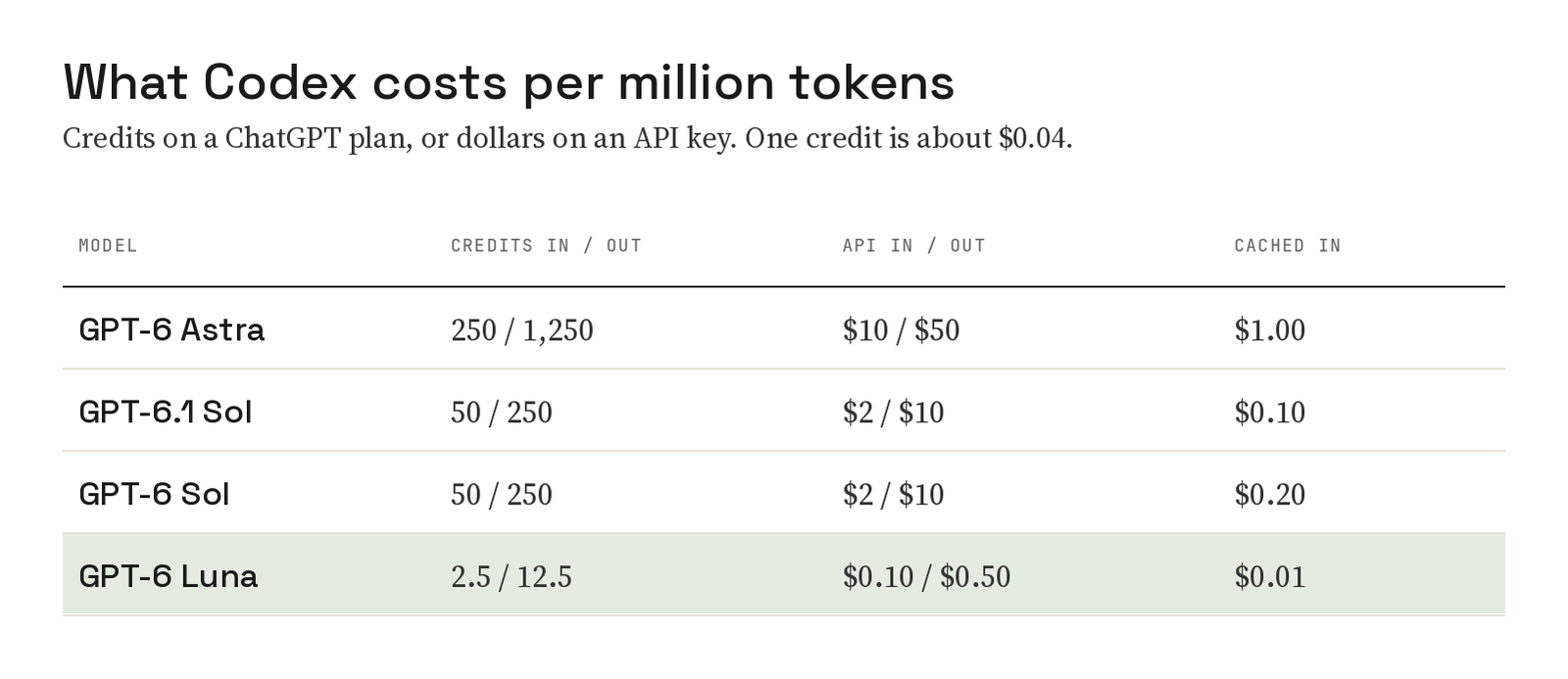
So OpenAI Codex pricing on an API key is simple to compare: Sol costs $2 in and $10 out per million tokens, Luna $0.10 and $0.50, and Astra $10 and $50. In a September test on the previous model generation, WorkOS found the credit route ran about 1.5x slower than the API with no quality difference, and it recommends switching to an API key once your plan runs out. Credits also expire after 12 months and aren't refundable.
Spend less before you upgrade
Before you jump from $20 to $100, look at where your tokens go. Most Codex waste comes from a long AGENTS.md that loads into every task, Codex reading files it never needed (lockfiles, build output, dependencies), and running the top model on routine edits. Moving small tasks from Sol to Luna alone stretches a Plus limit about 20 times, going by OpenAI's own ranges.
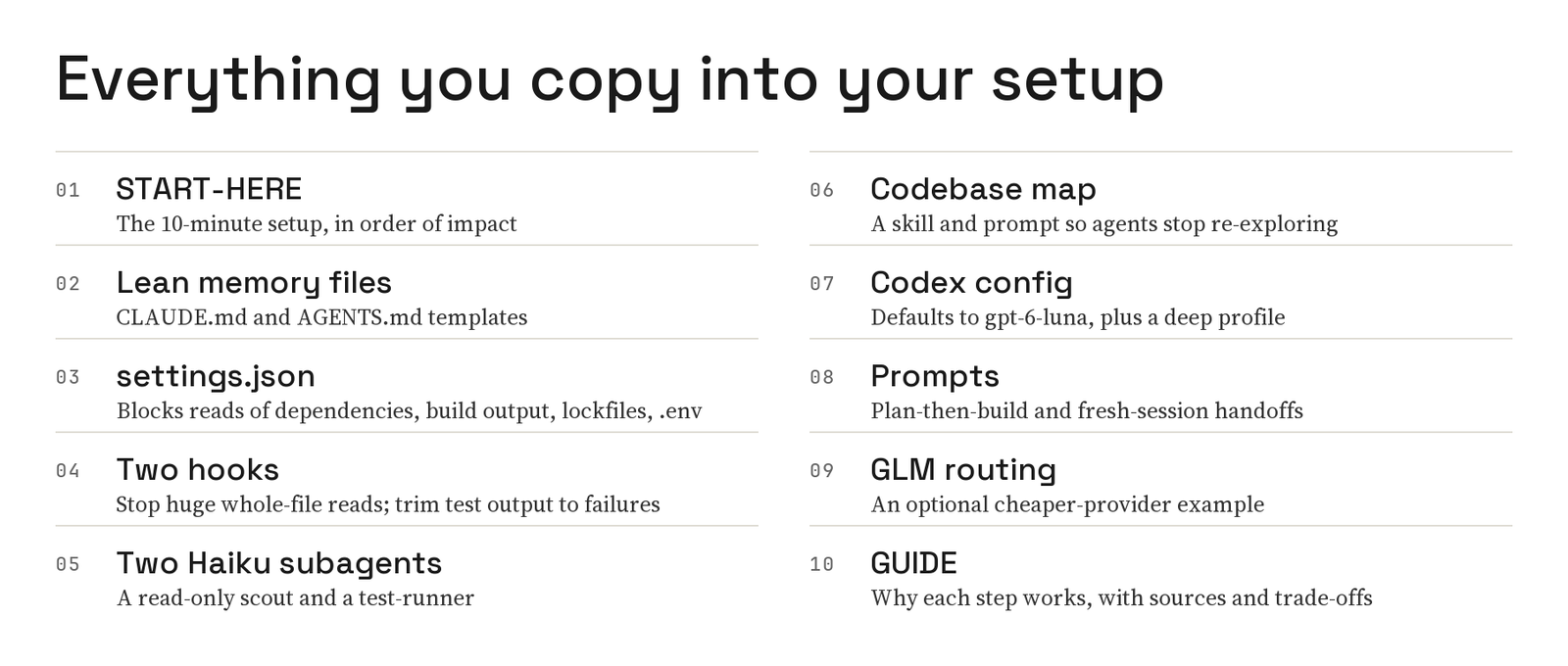
We packaged those fixes into the Token Saver Kit for Claude Code and Codex. It's the setup we use, as files you copy into a project. For Codex, that's a lean AGENTS.md template, a config.toml that defaults to GPT-6 Luna at medium reasoning with a separate "deep" profile for hard tasks, and prompts that build a codebase map so Codex stops re-exploring your repo. The Claude Code half adds hooks, subagents and read-blocking settings.
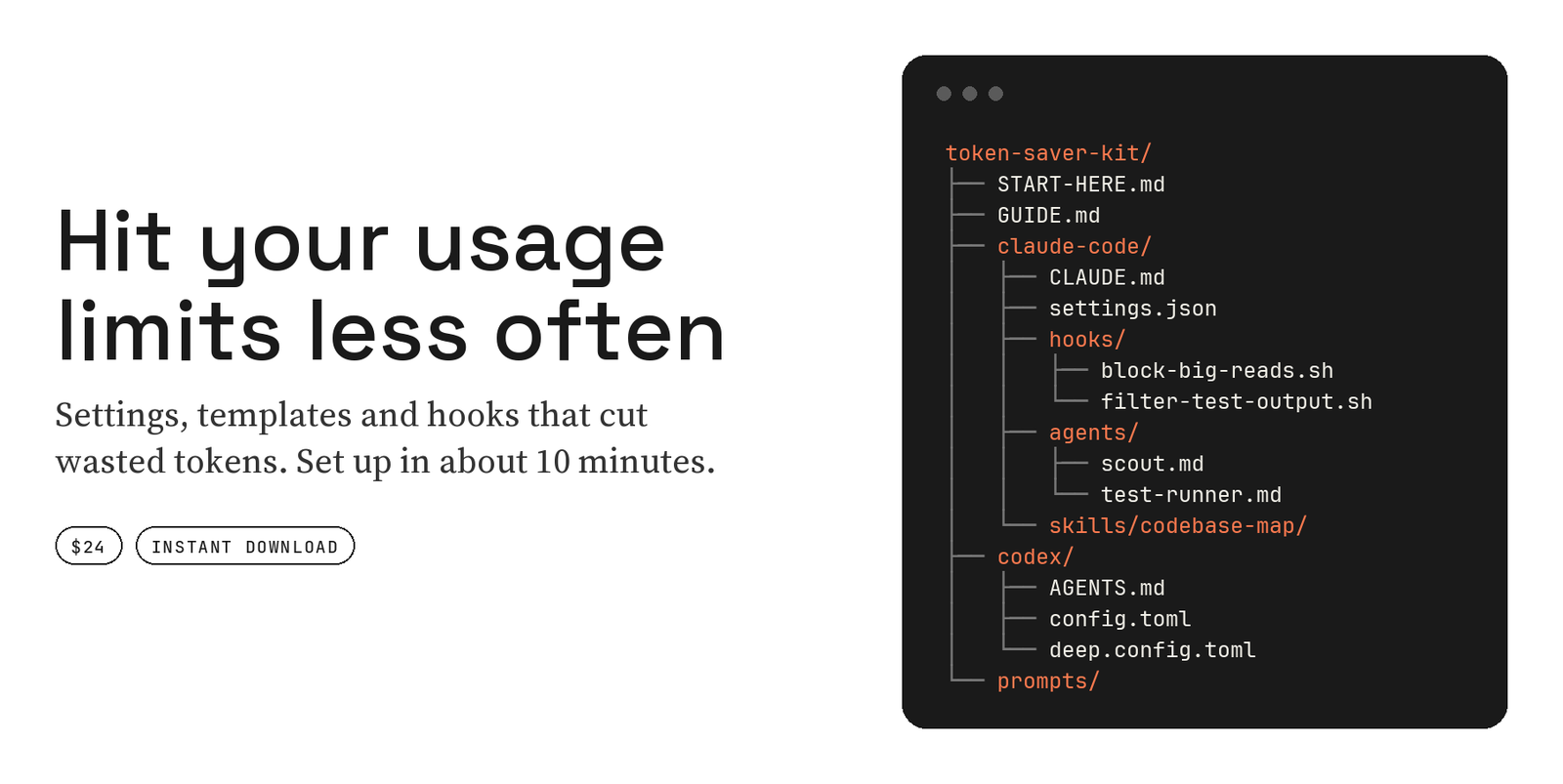
Setup takes about 10 minutes, and every file comes with a short note on why it works, linked to OpenAI's and Anthropic's docs. It costs $24 once, under a third of the $80 a month gap between Plus and the cheapest Pro plan. We won't promise a set saving, because it depends on how you work. The guide shows how to measure your usage before and after with Codex's /status command.
Codex pricing FAQ
How much is Codex per month? $20 on Plus, $100, $200 or $500 on Pro, and $25 per Business seat ($20 billed annually). Free and Go ($8) include a limited desktop-only version.
Is Codex included with ChatGPT Plus? Yes, in the CLI, IDE extension, web and iOS, with GPT-6.1 Sol and GPT-6 Luna.
Is ChatGPT Pro worth it for Codex? Only if you hit the Plus five-hour limit most days after switching routine work to Luna. Pro currently removes that limit.
How much do Codex credits cost? About $40 per 1,000 credits. A million GPT-6.1 Sol input tokens costs 50 credits, or about $2.
Sources
Brian Weerasinghe is the founder and editor of AI Eating The World, where he covers artificial intelligence, tech companies, layoffs, startups, and the future of work. His reporting focuses on how AI is transforming businesses, products, and the global workforce. He writes about major developments across the AI industry, from enterprise adoption and funding trends to the real-world impact of automation and emerging technologies.