Microsoft offered a voluntary exit to about 60,000 employees, roughly 27% of its workforce, then reported $36.6B in quarterly profit and $39.4B in capital spending. We argue buyouts are becoming Big Tech's preferred way to cut staff while funding AI, and explain what eligible employees should weigh.
The Microsoft layoffs that aren't called layoffs
The biggest round of Microsoft layoffs in 2026 may never be counted as layoffs. On October 26, Chief People Officer Amy Coleman announced a Voluntary Exit Offer for employees in participating teams in the US, Canada, the UK and India, at level 70 and below. Reuters and AP reported that about 60,000 people are eligible, roughly 27% of the 223,000 full-time employees Microsoft reported at the end of June.
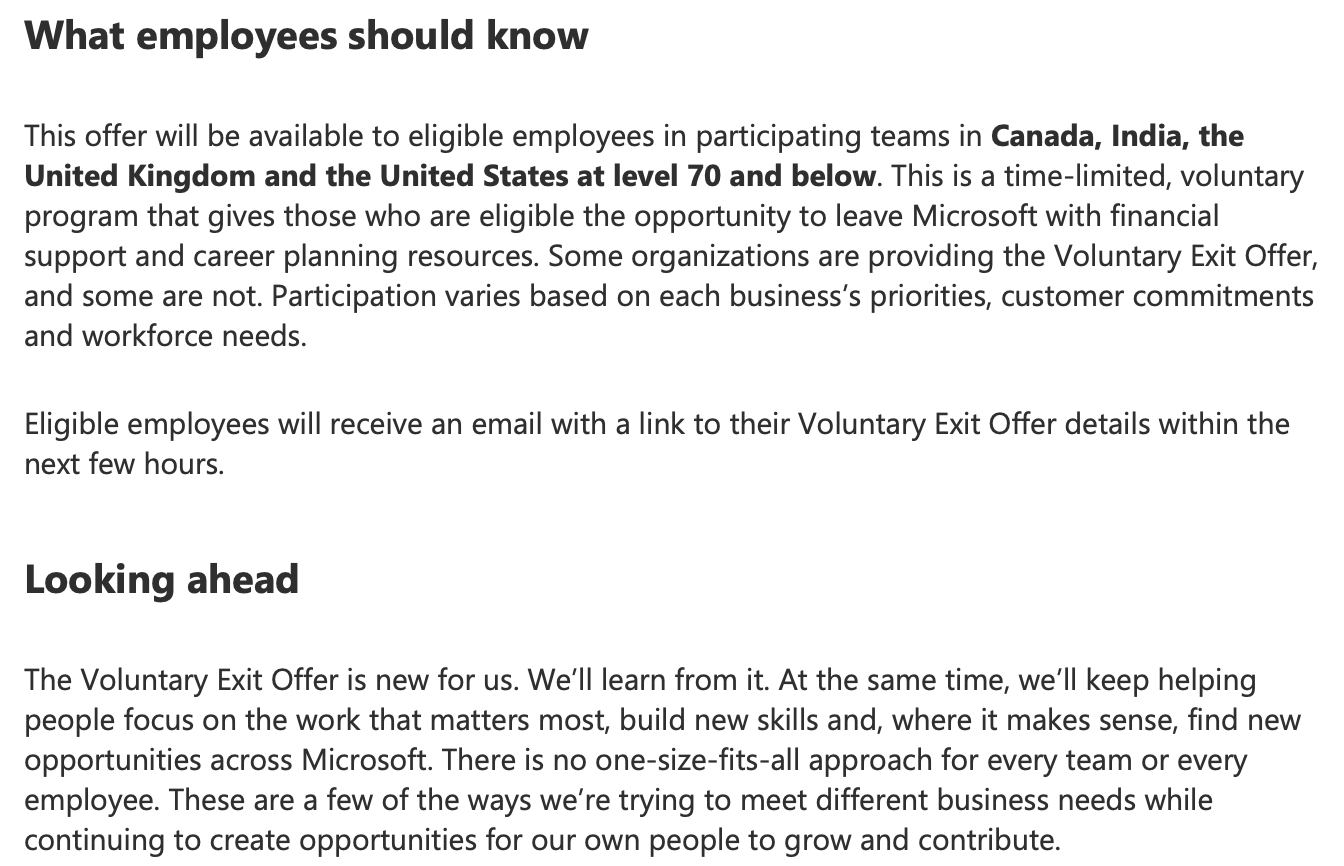
Microsoft's post frames the offer around choice and flexibility, and calls it "new for us." It does not mention AI. But two days later, Microsoft reported quarterly results that explain the timing better than the memo does. This is an opinion piece, and our view is simple: the voluntary buyout is becoming Big Tech's preferred tool for shrinking headcount to pay for AI infrastructure.
The money behind the Microsoft buyouts
This is not a company in trouble. For the quarter ended September 30, Microsoft reported revenue of $92.3B, up 19%, and GAAP net income of $36.6B, up 32%. Azure revenue grew 48%. Cash spent on property and equipment, mostly data centers, was $39.4B, against $19.4B a year earlier.
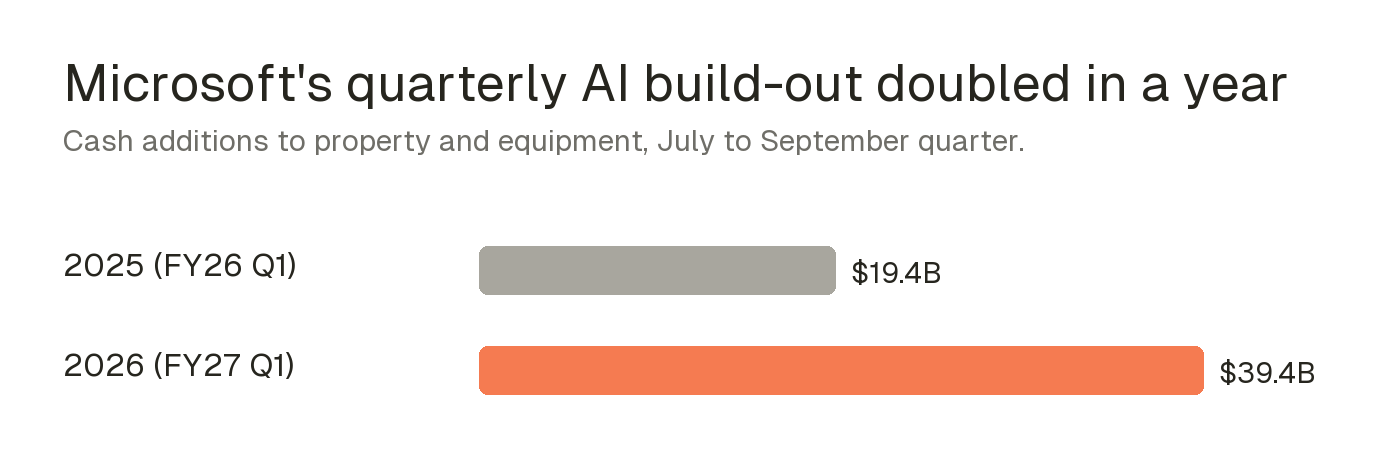
CFO Amy Hood told analysts that total capital expenditures, including finance leases, were $45.2B, that spending would top $50B next quarter, and that calendar 2026 spending should land around $170B. She also said Microsoft's cost guidance "includes an estimate for the recently announced employee voluntary exit offer."
Put those numbers next to each other. Every dollar of payroll Microsoft does not carry in 2027 is a dollar it can put into GPUs. The company never said that, but Reuters led its story with exactly that reading, and we think it is the right one.
Why a voluntary buyout beats a layoff, for Microsoft
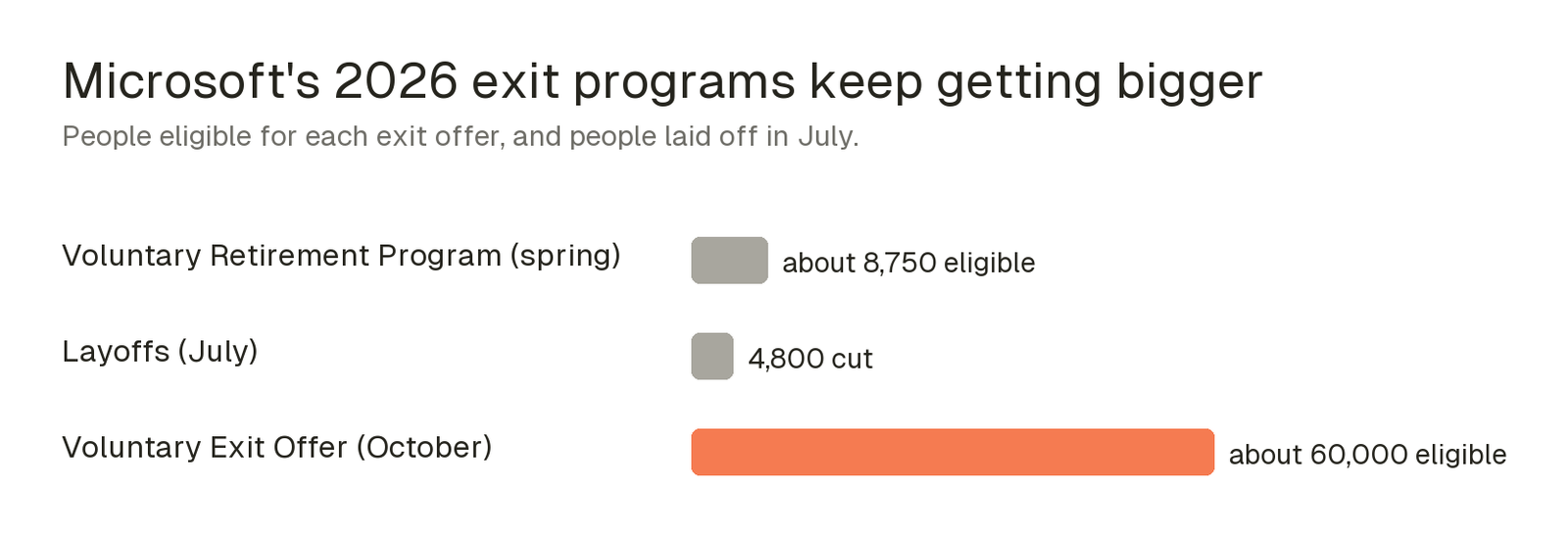
This is Microsoft's third workforce move of 2026. In the spring, it offered a Voluntary Retirement Program to about 8,750 US employees, around 7% of its US workforce, according to AP. In July it laid off about 4,800 people, including in Xbox. Now it has offered an exit to about 60,000.
From the company's side, a voluntary buyout has clear advantages over involuntary tech layoffs. There is no list of names to defend, less risk of discrimination claims, and far less bad press. Under the federal WARN Act, employees who leave voluntarily generally do not count toward the job losses that trigger 60-day notice rules. And the company can fold the cost into normal severance: a Microsoft spokesperson told Business Insider the terms are similar to its standard package.
The downside is that buyouts make AI layoffs harder to see. Trackers count announced cuts, and a buyout that thins a team by 15% shows up nowhere. That is one reason we keep our own AI layoffs tracker and will record the Microsoft result once acceptances are known.
The counterargument: buyouts really are kinder
The fair case for Microsoft is that a buyout gives people a choice that a layoff takes away. Someone already planning to leave can go with severance instead of resigning with nothing. Nobody is walked out of a meeting. Coleman's memo says exactly this, describing the offer as a new choice for people considering a future outside the company.
We agree that is better than a surprise layoff. But voluntary programs carry a known problem: the people most likely to take the money are the ones with the best outside options. Companies lose strong performers and keep people who have nowhere else to go. If acceptances fall short, the involuntary cuts often follow anyway. Microsoft has not said how many acceptances it expects, and the answer will arrive after the early December deadline.
What this means for tech layoffs in 2026 and beyond
Microsoft is the clearest example yet of a pattern we have tracked all year: rising profits, rising AI capital spending and a shrinking workforce at the same time. Uber made the same trade in September, as we covered in Uber's 3,300 layoffs and the tech layoffs 2026 pattern. Expect other large US employers to copy the buyout format, because it drew far less backlash than a layoff when Microsoft tried it in the spring.
The thing to watch is the acceptance number. If a large share of the 60,000 say yes, Microsoft job cuts in 2026 could end up larger than any layoff it has announced, without ever being announced as one.
If you're eligible for the Microsoft voluntary buyout
- Get your exact Microsoft severance number in writing. Reports describe terms similar to the standard package, but individual offers vary by level and tenure.
- Ask whether your team is also likely to see involuntary cuts. A buyout often signals where the next round will land.
- Compare the offer with your unvested stock. Leaving at year-end may forfeit grants that vest soon after.
- Check health coverage, visa status and non-compete terms before signing. For H-1B holders, a voluntary exit starts the same 60-day clock as a layoff.
- Don't decide on fear alone. If you were planning to stay and your work is tied to AI, cloud or security, the odds favor staying.
Related: Get the AETW newsletter
Sources
- Microsoft Official Blog: Introducing a Voluntary Exit Offer, Amy Coleman (October 26, 2026)
- Microsoft Investor Relations: FY27 Q1 press release (October 28, 2026)
- Microsoft Investor Relations: FY27 Q1 earnings call (October 28, 2026)
- AP: Microsoft offers 60,000 employees voluntary buyouts as AI spending accelerates (October 26, 2026)
- Reuters via Virginia Business: Microsoft offers buyouts to 60,000 employees (October 27, 2026)
- Let's Data Science: Microsoft offers voluntary buyouts to about 60,000 employees
- US Department of Labor: Worker Adjustment and Retraining Notification (WARN) Act