Image: Flickr / Wikimedia Commons / Unsplash
NVIDIA Puts AI in Orbit With the Vera Rubin Space-1 Module
The chipmaker unveiled a radiation-hardened computing platform for space at GTC 2026, with six industry partners already committed.
This article was produced by the AETW editorial team.
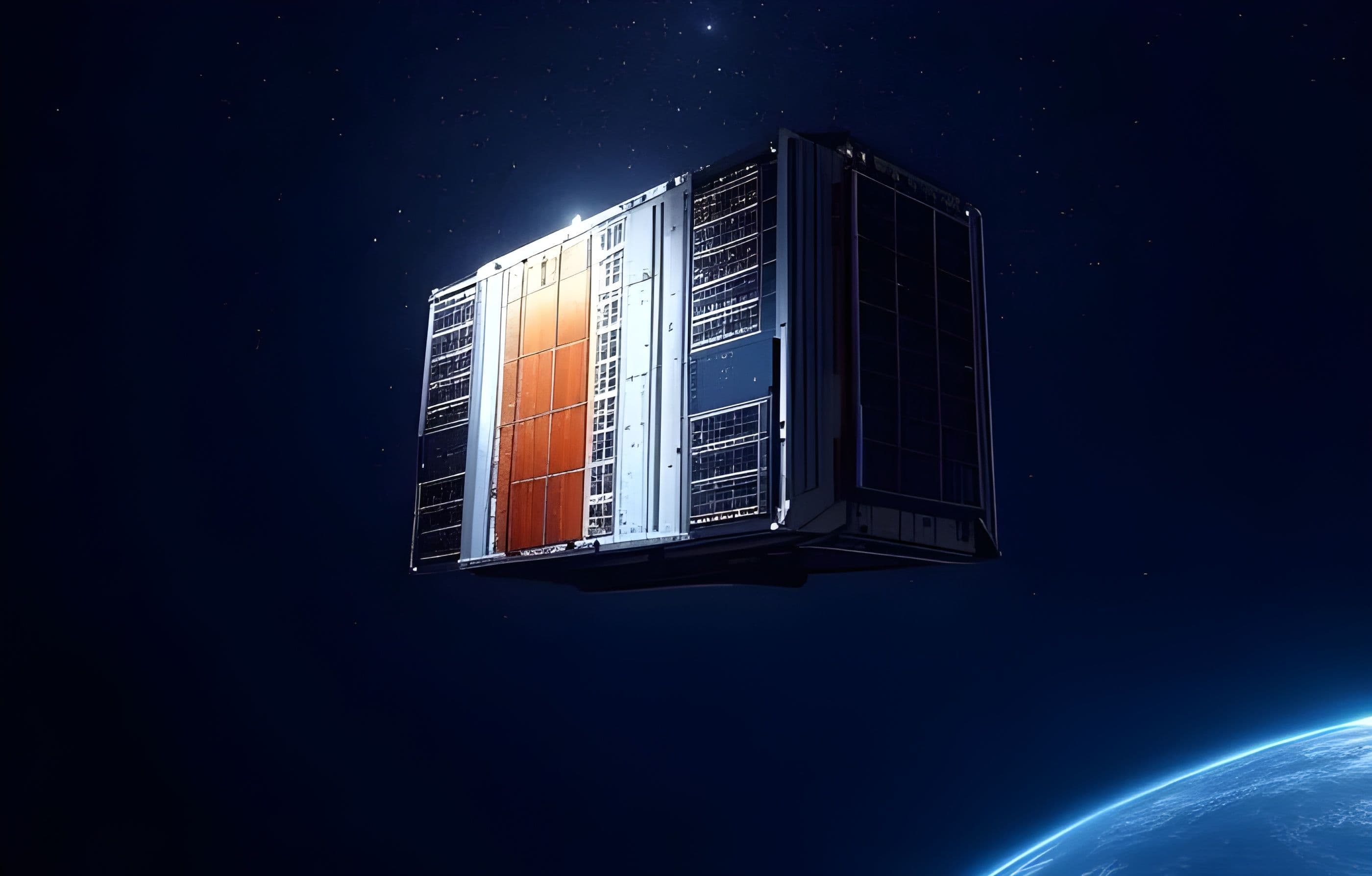
NVIDIA announced the Vera Rubin Space-1 Module at GTC 2026 - a space-qualified AI computing platform delivering 25x more inferencing performance than the H100, with six partners already deploying it for orbital data centers and autonomous space operations.
What NVIDIA announced
NVIDIA CEO Jensen Huang unveiled the Vera Rubin Space-1 Module at the company's GTC 2026 conference on March 16. The module is a space-qualified variant of NVIDIA's Rubin computing platform - the same architecture powering terrestrial AI data centers - adapted to operate in orbit.
The announcement marks NVIDIA's first formal hardware roadmap extension beyond Earth. Target applications include orbital data centers, advanced geospatial intelligence processing, and what NVIDIA calls autonomous space operations: satellites and orbital systems that can make decisions without waiting on ground control.
What the hardware actually does
The Space-1 module is built around the Rubin GPU and Vera CPU, paired with NVIDIA's NVLink 6 Switch, ConnectX-9 SuperNIC, BlueField-4 DPU, and Spectrum-6 Ethernet Switch. NVIDIA claims it delivers up to 25x more AI compute for space-based inferencing compared to the H100.
The defining constraint for any space-bound hardware is SWaP - size, weight, and power. Rockets impose strict limits on all three. NVIDIA says the module is specifically engineered to meet those constraints while still delivering data-center-class AI performance.
For lighter workloads, NVIDIA is also offering IGX Thor, based on the Blackwell architecture and aimed at edge environments, and Jetson Orin for real-time vision, navigation, and sensor data processing. IGX Thor and Jetson Orin are available now. The Space-1 Vera Rubin Module does not yet have a release date.
Six partners already committed
Six companies are integrating NVIDIA platforms across orbital and ground environments: Aetherflux, Axiom Space, Kepler Communications, Planet Labs, Sophia Space, and Starcloud.
Starcloud sent the first NVIDIA H100 GPU to orbit on a test satellite in November 2025 and subsequently ran inference and AI training workloads on it from space. Kepler Communications is deploying Jetson Orin across its satellite constellation for AI-driven data routing. Axiom Space launched an orbital data center prototype to the International Space Station in 2025. Planet Labs announced a new collaboration with NVIDIA to accelerate its Earth-imaging data analysis pipeline.
Aetherflux, founded by former Robinhood co-founder Baiju Bhatt, is targeting an orbital data center satellite deployment in Q1 2027. Its model combines space solar power with onboard computing, aiming to use the energy advantages of orbit to run AI workloads without terrestrial power constraints.
The broader race for space compute
NVIDIA's move sits inside a larger industry shift toward space-based AI infrastructure, driven partly by the strain AI demand is putting on terrestrial power grids and rising electricity costs. Google unveiled Project Suncatcher in November 2025, an initiative to deploy constellations of solar-powered satellites running Google's TPU chips. SpaceX, following its acquisition of xAI in a reported $1.25 trillion deal, has sought FCC approval to launch 1 million satellites for AI data center purposes. Blue Origin is also reportedly developing space data center hardware.
Jeff Bezos predicted in October 2025 that gigawatt-scale orbital data centers were 10 to 20 years away, citing continuous solar energy and simplified cooling in vacuum as the primary long-term advantages. The NVIDIA announcement, and the six partners already building around it, suggests that timeline is being pulled forward.
The obstacles that remain
The engineering challenges are real. Radiation degrades chips over time and at rates that ground-based hardware was never designed to handle. Space hardware cannot be maintained or upgraded after launch. Thermal management in vacuum is a different problem from air-cooled terrestrial data centers. And launch economics, while improving, still add significant cost per unit of compute relative to building a data center on the ground.
Morgan Stanley analysts flagged radiation exposure, orbital debris hazards, and regulatory complexity as key risks for the sector. SpaceX's 1 million satellite plan has already drawn opposition from scientists over light pollution and orbital congestion concerns. Some analysts have described the orbital data center concept as speculative at current scale.
NVIDIA is not building the data centers itself - it is selling the compute hardware and letting partners take on the mission risk. The Space-1 module still lacks a release date, meaning near-term deployments will rely on the already-available Jetson Orin and IGX Thor platforms.
Sources
Brian Weerasinghe is the founder and editor of AI Eating The World, where he covers artificial intelligence, tech companies, layoffs, startups, and the future of work. His reporting focuses on how AI is transforming businesses, products, and the global workforce. He writes about major developments across the AI industry, from enterprise adoption and funding trends to the real-world impact of automation and emerging technologies.