Image: Flickr / Wikimedia Commons / Unsplash
Cloudflare Cuts 1,100 Jobs and Calls It an AI Upgrade
The connectivity cloud company is eliminating 20% of its workforce and blaming a 600% surge in internal AI usage. Investors are not convinced.
This article was produced by the AETW editorial team.
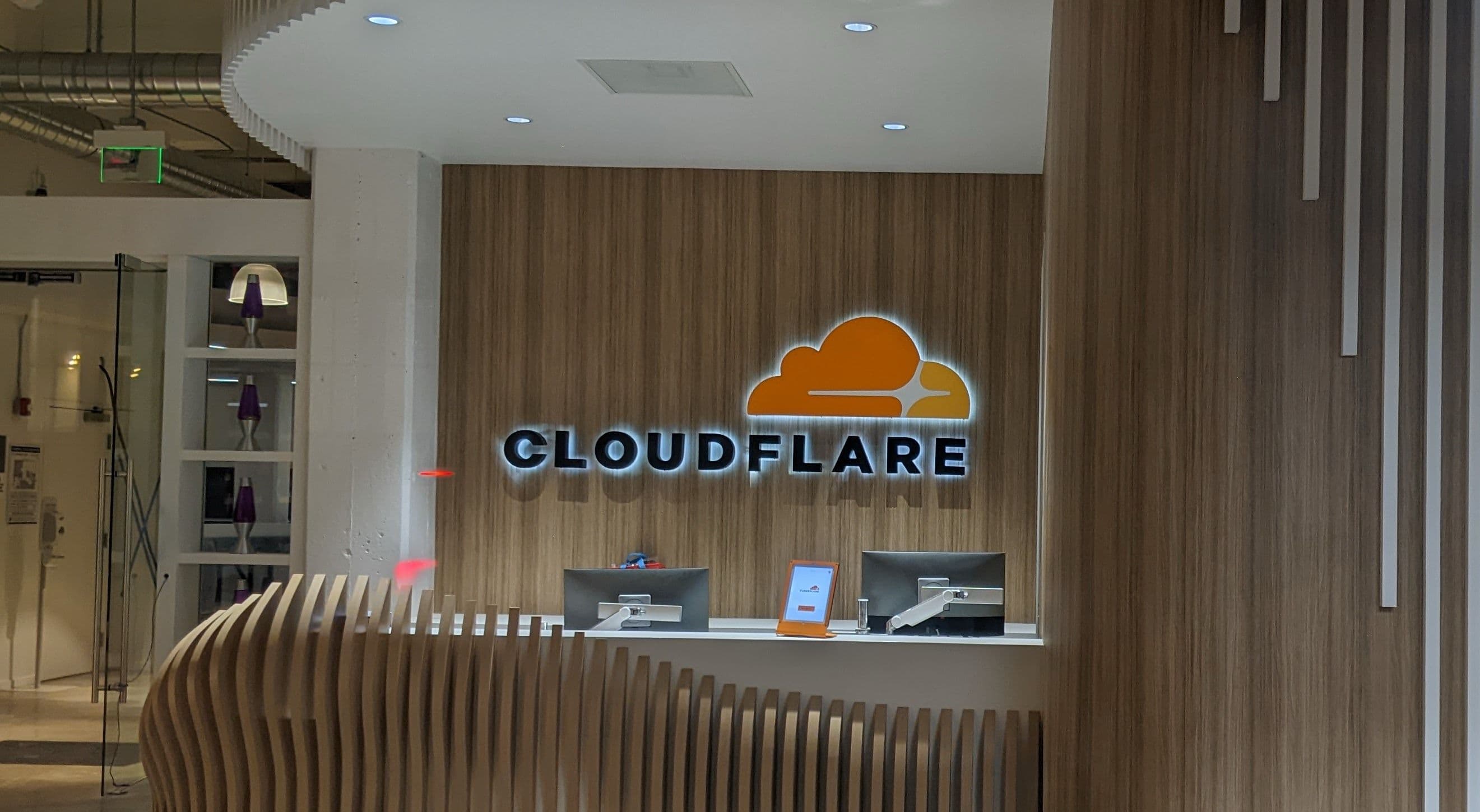
Cloudflare is laying off 1,100 employees globally - about 20% of its workforce - framing the move as a structural shift to an agentic AI-first operating model, even as it beat Q1 earnings expectations. Its stock dropped more than 16% after hours.
What happened
On May 7, 2026, Cloudflare announced it was cutting more than 1,100 employees globally, representing approximately 20% of its total workforce. The announcement came on the same day the company reported Q1 2026 earnings that beat Wall Street expectations, a combination that did little to reassure markets. Shares fell more than 16% in after-hours trading.
In a memo sent to staff, co-founders Matthew Prince and Michelle Zatlyn framed the cuts as a deliberate restructuring rather than a cost-reduction exercise. The company's internal use of AI has grown more than 600% in the past three months alone, they wrote, with employees across engineering, HR, finance, and marketing running thousands of AI agent sessions each day. The argument: if AI is already doing the work, the company needs to be structured differently to match.
The numbers behind the decision
Q1 revenue came in at $639.8 million, up 34% year-over-year and ahead of analyst estimates of $622 million. Adjusted earnings per share were 25 cents, compared to the 23 cents expected. Free cash flow reached $84.1 million, or 13% of revenue, up from 11% in Q1 2025.
Despite the strong quarter, Cloudflare's Q2 revenue guidance of $664 million to $665 million landed just below consensus estimates of $665.34 million - a miss measured in the millions that the market treated as a signal of slowing near-term growth. Full-year 2026 guidance was raised to $2.805 billion to $2.813 billion, narrowly ahead of the $2.8 billion analysts had modeled.
The layoffs are expected to cost between $140 million and $150 million in total charges, with roughly $105 to $110 million in cash costs and $35 to $40 million in non-cash stock-based charges. Those charges will be recognized in Q2. The company expects the cuts to be substantially complete by the end of Q3 2026.
The agentic AI argument
Cloudflare's framing sets it apart from the typical tech layoff announcement. Most companies cite efficiency gains or macroeconomic pressure. Cloudflare is making a structural claim: that agents running across the business have fundamentally changed what human headcount is required to do, and that the company's organizational architecture needs to catch up.
Prince described AI as the biggest tailwind in Cloudflare's history and positioned the company as its own most demanding AI customer. In the earnings call, he noted that Cloudflare has always operated as a giant scheduler across its network, and that AI agents fit naturally into that model. The company is not replacing people with a single AI tool. It is reorganizing around a model where agents handle large portions of repeatable work across every function.
Whether this is a genuine operational shift or a more sophisticated version of the standard AI efficiency layoff narrative is difficult to evaluate from the outside. The 600% internal AI usage figure is striking, but Cloudflare has not published data on what that usage has actually displaced in terms of output or headcount decisions.
Cloudflare is not alone
Cloudflare joins a growing list of enterprise tech companies that have cut staff in 2026 while citing AI as both cause and justification. Oracle, Meta, PayPal, Block, and Atlassian have all announced workforce reductions in recent months, typically with some reference to AI-driven productivity or reorganization.
The pattern raises a question that is increasingly difficult to avoid: if AI is the justification rather than the cause, companies are using it as cover for cuts that would have happened anyway. If AI is genuinely the cause, the pace of structural displacement is moving faster than most organizations have publicly acknowledged. Either way, the frequency of these announcements in 2026 suggests this is no longer an edge case.
What investors saw that the memo did not say
Markets rarely punish a company for beating earnings. The 16% after-hours drop suggests investors read something in the Cloudflare announcement that the memo did not explicitly state. The most likely interpretation: a 20% workforce reduction combined with Q2 guidance that just missed estimates signals that near-term growth is being sacrificed for a restructuring whose productivity benefits are not yet visible in the numbers.
Cloudflare's restructuring charges will hit Q2, which means the next earnings report will carry both the cost of the layoffs and the pressure to show that the remaining workforce - augmented by agents - is actually more productive. Investor Day is scheduled for June 9, 2026, which is likely where Cloudflare will try to fill in that picture.
Key takeaways
- Cloudflare is cutting 1,100 employees (approximately 20% of its workforce), with layoffs substantially complete by end of Q3 2026.
- Q1 2026 revenue was $639.8 million, up 34% year-over-year, beating estimates. Q2 guidance narrowly missed analyst expectations.
- Internal AI usage grew more than 600% in three months, which Cloudflare cited as the structural reason for the reorganization.
- Layoff charges of $140 to $150 million will be recognized in Q2 2026.
- Cloudflare stock fell more than 16% after hours. Investor Day is set for June 9, 2026.
- Oracle, Meta, PayPal, Block, and Atlassian have all made similar moves in 2026, framing workforce cuts around AI efficiency.
Sources
Brian Weerasinghe is the founder and editor of AI Eating The World, where he covers artificial intelligence, tech companies, layoffs, startups, and the future of work. His reporting focuses on how AI is transforming businesses, products, and the global workforce. He writes about major developments across the AI industry, from enterprise adoption and funding trends to the real-world impact of automation and emerging technologies.