Image: Flickr / Wikimedia Commons / Unsplash
Marc Andreessen Says Companies Were Always Overstaffed. AI Is Just the Excuse to Finally Act.
The a16z co-founder's viral claim reframes the 2026 tech layoff wave as a decades-long reckoning, not an AI revolution.
This article was produced by the AETW editorial team.
Marc Andreessen says big companies have been overstaffed by 2-4x for decades, and AI is just the political cover they needed to finally fix it. With 92,000+ tech jobs cut in 2026 alone, the question is whether this is a long-overdue correction or the beginning of something more structural.
The claim that nobody wanted to say out loud

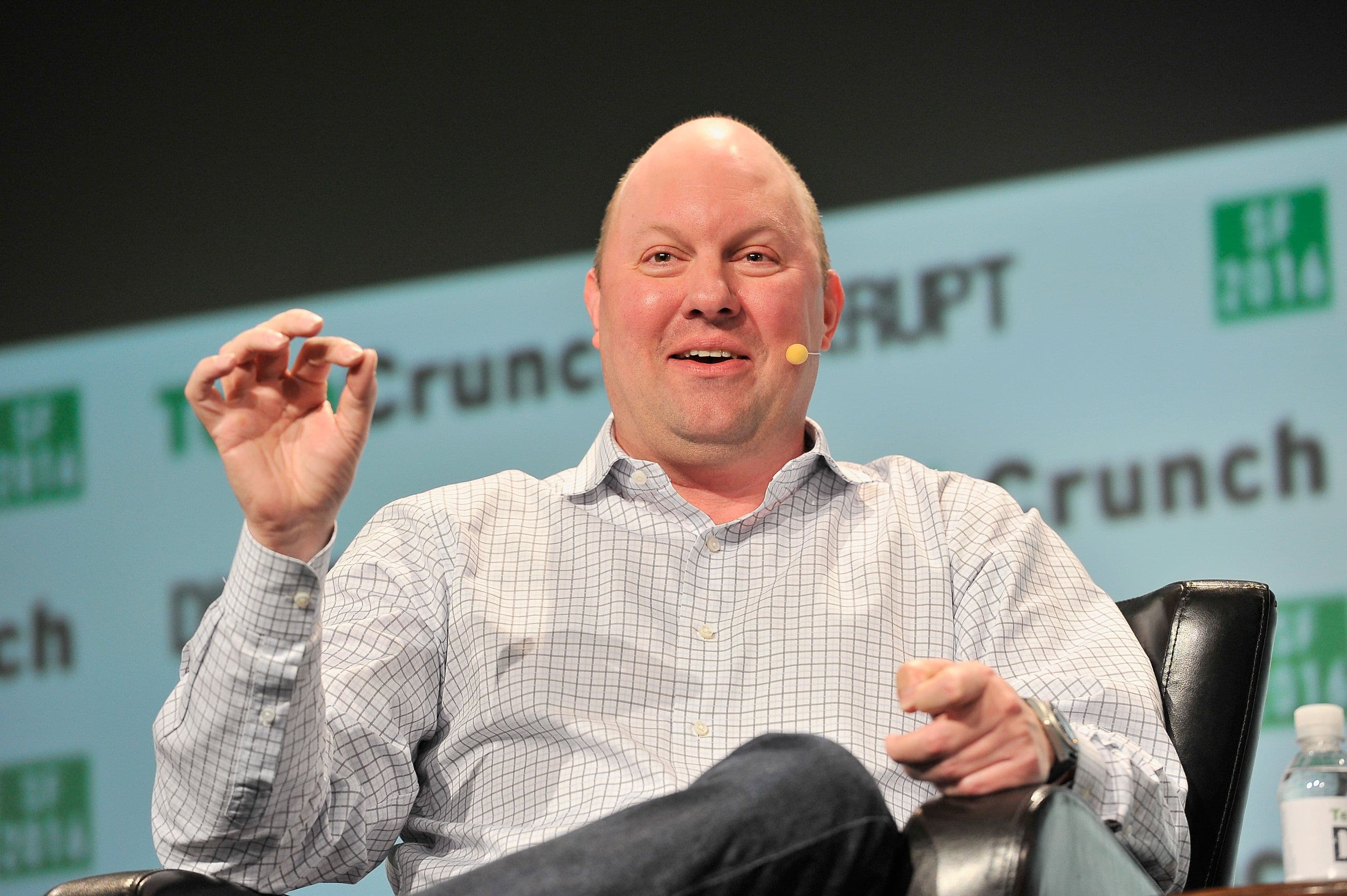
On May 8, Marc Andreessen posted a reply on X that cut through most of the current discourse around AI and layoffs in one paragraph. 'The confounding factor is that virtually every big company is overstaffed by 2-4x and has been for decades,' he wrote. 'AI is the catalyst/excuse to finally fix that. Of course nobody wants to say this out loud.'
The post followed an earlier interview on the 20VC podcast with Harry Stebbings, where Andreessen put specific numbers behind the assertion. His estimate: most large companies are overstaffed by at least 25%, many by 50%, and 'a lot of them by 75%.' The silver bullet, as he put it, is that everyone now has a clean reason to act. 'Now they all have the silver bullet excuse: Ah, it's AI.'
What the 2026 layoff data actually shows

The numbers running alongside Andreessen's comments are hard to dismiss. By late April 2026, over 92,000 tech workers had been laid off since January, according to Layoffs.fyi, bringing the cumulative total since 2020 close to 900,000. One tracker counted more than 150,000 tech jobs eliminated across 500-plus companies in 2026 alone, described as the largest concentrated wave of workforce displacement in a decade.
The roster of companies includes Microsoft, which cut approximately 23,000 roles across two rounds; Amazon, which eliminated at least 30,000 corporate positions since October 2025; Meta, which is planning reductions that could reach 20% of its total headcount; Oracle, which cut as many as 30,000 roles; and Salesforce, which removed 4,000 customer support positions after CEO Marc Benioff said AI agents now handle about 50% of service interactions. Block cut its workforce nearly in half, from 10,000 to under 6,000. Atlassian cut 10% of staff. Snap cut 16%.
At the same time, the four largest cloud and AI companies - Alphabet, Microsoft, Meta, and Amazon - are collectively projecting close to $700 billion in AI infrastructure spend this year. The math is straightforward: the companies cutting the most workers are also spending the most on AI.
The distinction Andreessen is drawing
Andreessen's argument is not that AI is harmless to employment. It's more specific than that. In the 20VC interview, he said that 'AI literally until December was not actually good enough to do any of the jobs that they're actually cutting' - meaning the current wave of layoffs cannot be mechanically caused by AI capability. The workforce reductions at companies like Amazon, Oracle, and Meta predate deployable AI at the scale required to replace those roles.
The overstaffing he's describing traces back further: the pandemic hiring surge of 2020-2021 inflated headcounts across the industry, and many companies simply never corrected. A Duke University and Federal Reserve survey from early 2026 found that CFOs rated AI's actual labor impact in 2025 as negligible. What changed was not capability but corporate will - and AI has supplied the narrative cover to finally exercise it.
This is what some are calling 'AI washing' - attributing to AI a round of restructuring that is actually the result of overhiring, rising interest rates, shareholder pressure for efficiency, and the end of the zero-cost-capital era. OpenAI's Sam Altman has used the term himself, though he's also acknowledged the displacement may deepen as AI capability genuinely catches up.
Where the argument gets complicated
The problem with the 'AI washing' frame is that it risks becoming its own form of reassurance. Even if current layoffs are primarily a correction for pandemic overhiring, the trajectory suggests AI's actual contribution to workforce reduction will grow, not shrink.
A Bloomberg analysis estimates AI-related job displacement could affect up to 502,000 roles economy-wide in 2026 alone. The same data shows a 92% increase in hiring for AI-specific roles, but the workers being hired are not the workers being cut. Customer support, quality assurance, content moderation, and middle management roles are being eliminated. Machine learning engineers and data infrastructure specialists are in shortage. One analyst framed the dynamic as a labor repricing story - roughly half of AI-attributed layoffs may result in the same roles being filled at lower wages or offshore, not eliminated entirely.
There is also the question of what happens when AI capability does catch up to the jobs being cut. Andreessen argues the 'lump of labor' fallacy is in play - that new technology creates jobs as fast as it displaces them, as it has historically. That argument has merit over long time horizons. Over shorter ones, the distribution of pain tends to be sharper and more concentrated than the distribution of new opportunity.
The operational read for builders
For startups and smaller companies watching the enterprise wave, the pattern is instructive regardless of which explanation you prefer. In the venture world, the expectation has already shifted: companies are expected to grow significantly faster with significantly fewer people, and those that can't articulate how AI changes their headcount trajectory are finding it harder to raise.
Block's Jack Dorsey framed it in a shareholder letter as plainly as anyone has: 'Intelligence tools have changed what it means to build and run a company.' Whether that's a genuine operational reality or a strategic narrative for investors, it's the frame that capital markets are now applying across the board. The practical implication is that staffing decisions - at every stage - are increasingly being made against an AI baseline, not a pre-AI one.
Sources
Brian Weerasinghe is the founder and editor of AI Eating The World, where he covers artificial intelligence, tech companies, layoffs, startups, and the future of work. His reporting focuses on how AI is transforming businesses, products, and the global workforce. He writes about major developments across the AI industry, from enterprise adoption and funding trends to the real-world impact of automation and emerging technologies.