Image: Flickr / Wikimedia Commons / Unsplash
Anthropic's $1.5B Copyright Settlement Doesn't Answer the AI Training Question
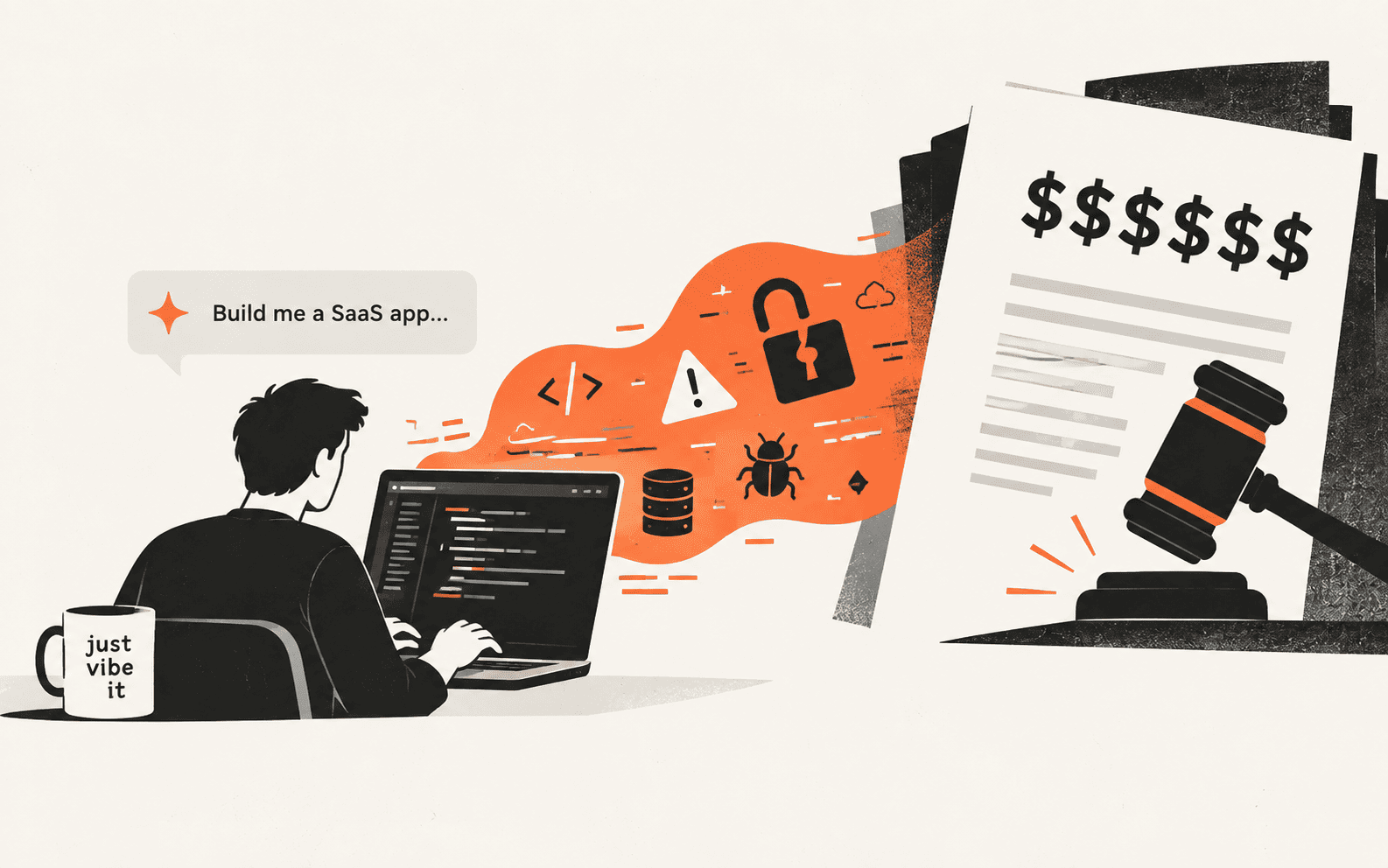
The final approval closes the largest copyright settlement in US history, but the deal that ends Bartz v. Anthropic is about how the company acquired its books, not whether training AI on them was legal.
Image: Flickr / Wikimedia Commons / Unsplash
This article was produced by the AETW editorial team.
Anthropic's $1.5 billion settlement in Bartz v. Anthropic just received final court approval, closing the largest copyright settlement in US history. Here's what the deal actually resolves, and what it leaves open for AI founders and enterprise buyers navigating data-provenance risk.
What the Anthropic copyright settlement actually pays for
On July 20, 2026, US District Judge Araceli Martinez-Olguin granted final approval to Anthropic's $1.5 billion settlement in Bartz v. Anthropic, closing what lawyers on both sides call the largest copyright class action recovery in US history. The deal compensates authors and publishers whose books Anthropic downloaded from pirate sites while assembling Claude's training library.
The math works out to roughly $3,000 per book, well above the going rate in other AI copyright disputes. Class counsel originally sought $187.5 million in attorneys' fees, a multiplier of 6.92 on their estimated lodestar. The court trimmed that to $101,561,111, a multiplier of 3.75, citing Ninth Circuit precedent that multipliers typically fall between 1 and 4. That difference of roughly $86 million flows back into the class fund instead.
Claims administration data shows a 92.77% claims rate among eligible rightsholders, and only 350 authors opted out before the deadline to pursue individual lawsuits instead. With final approval now in hand, disbursement to authors and publishers can begin.
The pirated acquisition behind the payout
The liability traces back to a narrow window: between June 2021 and July 2022, Anthropic downloaded more than seven million books from shadow libraries, including Library Genesis, Pirate Library Mirror, and Books3, to build a permanent digital library used in training Claude.
The settlement class is defined tightly around that acquisition, not around AI training generally. It covers copyright owners of any book Anthropic downloaded through LibGen in June 2021 or PiLiMi in July 2022, provided the work carries an ISBN or ASIN and meets specific US Copyright Office registration timing. That narrow definition, not a general ruling on AI training, is what the settlement actually resolves.
As part of the deal, Anthropic is required to destroy the original pirated files along with any copies derived from them.
Sources for this section
Why Judge Alsup's ruling, not the settlement, is the real precedent
The settlement exists because of a ruling issued more than a year earlier. On June 23, 2025, Judge William Alsup split Anthropic's conduct into three separate questions in Bartz v. Anthropic and answered each one differently. Training Claude on books was, in his words, exceedingly transformative and protected as fair use. Digitizing print books Anthropic had legally purchased was also fair use, since it simply replaced a physical copy with a digital one. But downloading and retaining pirated copies to build a permanent library was not fair use, and that question alone was sent to trial.
That third finding is what actually put Anthropic at risk. Statutory damages for willful infringement across millions of pirated works could have run into the hundreds of billions of dollars had a jury sided fully with the plaintiffs. Anthropic settled in September 2025 rather than let that number reach a jury, while keeping its fair use win on training intact.
Anthropic's deputy general counsel, Aparna Sridhar, has framed the deal in exactly those terms, describing it as a settlement reached after a court ruling that training AI on lawfully acquired books is fair use, one that continues to stand as law regardless of the settlement itself.
A settlement sets no precedent, and that gap matters
Because Bartz v. Anthropic ended in a settlement rather than a jury verdict, it creates no binding law on the piracy question. It resolves Anthropic's exposure without ever producing the appellate-level ruling the rest of the industry has been watching for.
Other cases have not landed on the same tidy split. Kadrey v. Meta reached a similar bifurcated result within days of the Alsup ruling, training was transformative, pirated acquisition was not protected, but that case remains active rather than settled. Thomson Reuters v. Ross Intelligence went further against the AI company: a Delaware court found that training a competing legal research tool on Westlaw headnotes was not fair use at all, because the output competed directly in Westlaw's own market. That case is now on interlocutory appeal to the Third Circuit.
The New York Times' case against OpenAI, consolidated into multidistrict litigation before a federal judge in the Southern District of New York, is still active and seeking damages in the billions. Getty Images v. Stability AI has split across two courts, with a UK trial already decided and a US summary judgment still pending. None of these cases has produced Alsup's clean distinction between lawful training and unlawful acquisition, which means the next AI company to face a jury may not get the chance to settle on terms as contained as Anthropic's.
The Anthropic lawsuit story isn't actually over
Even inside Bartz v. Anthropic, not everyone signed on. Judge Martinez-Olguin blocked late attempts by several prominent authors to opt out after the deadline, but 350 rightsholders successfully exited the class before the cutoff to pursue their own claims. Some of those, including the Chicken Soup for the Soul and Carreyrou suits, are already moving forward as individual actions, and the court's approval order is likely to prompt more.
Separately, Concord Music Group's copyright suit against Anthropic over song lyrics remains entirely untouched by the book settlement, since it involves a different category of copyrighted work. The broader legal landscape is genuinely shifting: courts are converging on a fact-specific test that weighs where training data came from, whether it was licensed, scraped, or pirated, alongside whether the AI's output substitutes for the original work's market.
For any AI company built on scraped or third-party data, the open question is no longer whether training is fair use. Judge Alsup already answered that for lawfully acquired material. The open question is whether every input into that training pipeline can be traced back to a lawful source, and what a court would find if it could not.
For founders and enterprise buyers, the practical shift is already visible. Procurement teams increasingly ask AI vendors for training-data lineage before they get anywhere near a benchmark comparison, and a vendor who cannot produce that documentation is often eliminated from consideration before pricing ever comes up.
Sources for this section
What to check before your next AI vendor contract
- Ask any AI vendor how its training data was sourced, and whether that sourcing can be documented, not just described in marketing language.
- Distinguish licensed data, publicly scraped data, and pirated or shadow-library data in vendor contracts, since courts are now treating these as legally distinct categories with different risk profiles.
- Push for indemnification language covering training-data provenance in enterprise AI procurement contracts, not just standard IP infringement warranties.
- Track the active cases, including Kadrey v. Meta, the OpenAI MDL, Thomson Reuters v. Ross, and Getty v. Stability AI, since any of them could produce the appellate ruling Bartz v. Anthropic never did.
- Treat data governance frameworks like ISO/IEC 42001 as an early signal of vendor maturity on this issue, not just a compliance checkbox.
Sources
Brian Weerasinghe is the founder and editor of AI Eating The World, where he covers artificial intelligence, tech companies, layoffs, startups, and the future of work. His reporting focuses on how AI is transforming businesses, products, and the global workforce. He writes about major developments across the AI industry, from enterprise adoption and funding trends to the real-world impact of automation and emerging technologies.